Corrections to Grandma’s Nanny Story and Tales of Slavery in the Womack Lineage

    
In my last post, I shared a brief memory of my grandmother and the woman she always referred to as her “nanny.” I was inspired to write it after reading a troubling post on Facebook where someone recounted a family using the N-word for their household caregiver. It shook me, because in my very large family, I have absolutely no memory of anyone ever using that word. My grandmother never used it. She spoke of her nanny with fondness and respect, and that was the standard of decency she passed down to us.

However, as a professional archivist, I know that oral family histories are beautiful but imperfect things. They have a way of compressing time, blending generations together until the timelines blur.

Shortly after publishing that post, I received a note from my dad’s cousin, Carolyn. She is the oldest living relative of that generation, and she is wonderful at keeping our history straight. Carolyn gently pointed out a major flaw in my timeline: because slavery was abolished in 1865, and my grandmother was born well after that, she could not have had an enslaved nanny.

Carolyn was entirely right about the timeline. The woman my grandmother remembered so fondly from her childhood in Kentucky was undoubtedly a hired domestic servant or worker.

But Carolyn’s correction got my archivist wheels turning. While the nanny of my grandmother’s youth was free, I knew the stories I grew up hearing about our ancestorstoal tales of vast tobacco crops and prized racehorses in Greenup County, Kentucky. My historical intuition told me that an operation of that scale required a massive amount of manual labor. I decided to dig into the archival records to see exactly what kind of world my grandmother’s people came from.

What I found was a heavy, complex history.

The Womack line in Kentucky was established by my great-great-great-grandfather, James Tignal Womack, who moved his family and his wealth from Prince Edward County, Virginia, to the Little Sandy River around 1812. When he passed away in 1827, his will divided twenty-three enslaved individuals among his heirs.

His son, Archer Tignal Womack, settled in Oldtown, Greenup County. The federal slave schedules show that he held eleven enslaved people in 1850 and seven in 1860. In the hilly terrain of eastern Kentucky, owning that many people made him a substantial slaveholder. This labor force directly matched the stories of large-scale tobacco farming and horse breeding.

Because Greenup County sat right on the Ohio border, it was a hotbed for the Underground Railroad. Local newspapers from January 1859 even document a “panic among the slaveholders” after two young enslaved men successfully escaped from Archer Womack’s farm, prompting him to sell others further south for security.

My great-great-grandfather, William Archer Womack, grew up directly inside this environment. When the Civil War broke out, he held intense Southern secessionist sympathies. He was eventually arrested by Union forces, treated as a prisoner of war, and sent north to Camp Chase, a notorious military prison in Columbus, Ohio, before returning home to Oldtown as a businessman after the war.

Discovering this census and military data didn’t change the timeline Carolyn corrected, but it gave the story a much deeper meaning.

My grandmother was raised by people who had actively participated in, profited from, and fought to defend the slaveholding South. Yet, somewhere along the way, she made a choice. She broke the cycle of prejudice. She refused to carry the dehumanizing language of that era into the ears of her children and grandchildren.

“From dust we came, and to dust we will go”, she oft-repeated. and perhaps it is in recognizing our shared dust that my grandmother found her grace. The woman she loved as a child may have been a hired servant rather than an enslaved nanny, but the true miracle of the story is that my grandmother chose to look backward at her family’s history, and then chose to walk forward with love.

I will be bringing a great deal more history in subsequent posts. Stay tuned if you dare.

In bringing this historical documentation to light, I have gratefully utilized AI as a digital tool and editorial assistant to help research, structure, and refine the narrative. However, the intellectual framework, the emotional weight, and the driving motivation behind this work are entirely my own. This remains, above all, a direct reflection of my own voice and my deeply personal desire to ensure this history is remembered.
The Owl and the Flight of the Crows

I wanted to tell you something just in case I forget. It was New Year’s Eve and…

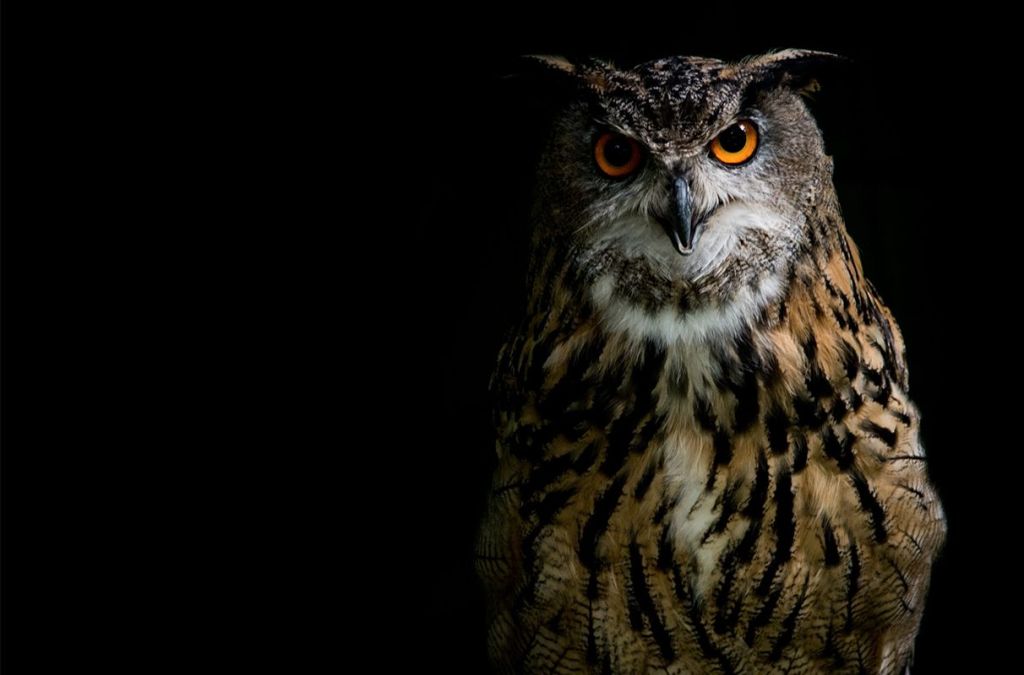
we were out on the sidewalk about to get in the car to drive to a party. We were stopped in our tracks and we quickly hushed. Was that an owl? Yes. It had to be a big owl because it had a very big voice and its message was urgent, if I might extrapolate. It was in the fir tree next door to our house.

I was surprised because I hear owls all the time in our yard, but they’re small owls. Neighbors have been able to catch photos of them but I have only heard them on *Merlin. We live just blocks away from a large park where predator birds are regularly seen.

This might have been a forewarning of what was to come at the party that evening.

The story is about crows and owls and not the disturbing occurrence at the party that night. But there was a huge upset that evening. We left the party early. I didn’t think of the owl’s presence and warning until days later.

On our way home, we drove downtown to look at the Christmas lights and the street parties going on. Cafes, bars and restaurants were in full party mode. People filled the sidewalks and were walking al】nd standing in the streets as music emanated from indoors.

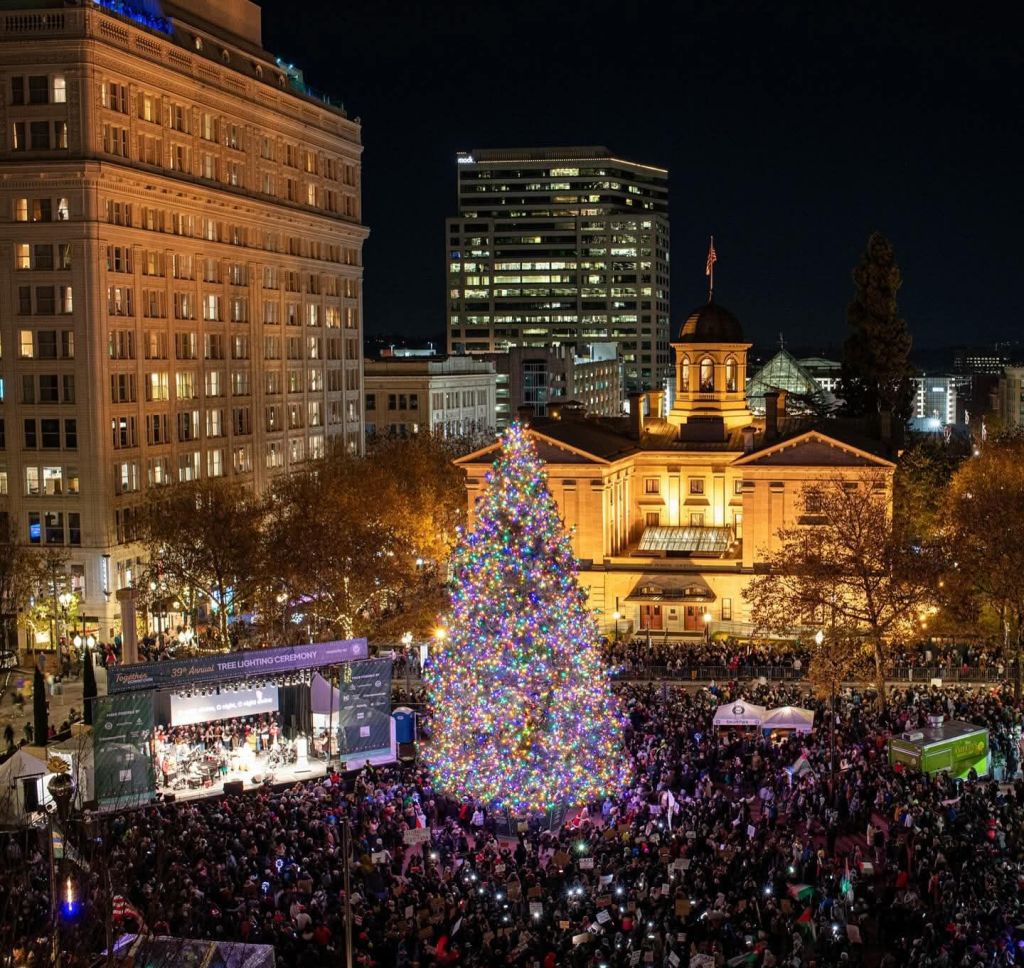
The annual Christmas tree in the square was lit up and probably could have been seen from space. The theaters were emptying out after shows onto the streets.

In the square, live music was playing, and it was packed out with people streaming in, dancing and laughing and talking. Everyone was in a party mood.

On every street corner, there were people selling the most amazing lights suspended on poles. They looked like giant dandelion seed heads of iridescent colors swinging in the night air.

In spite of the upset at the party, the night ended well. When we got home, we made mimosas and stayed awake until the clock struck midnight and we welcomed in 2026.

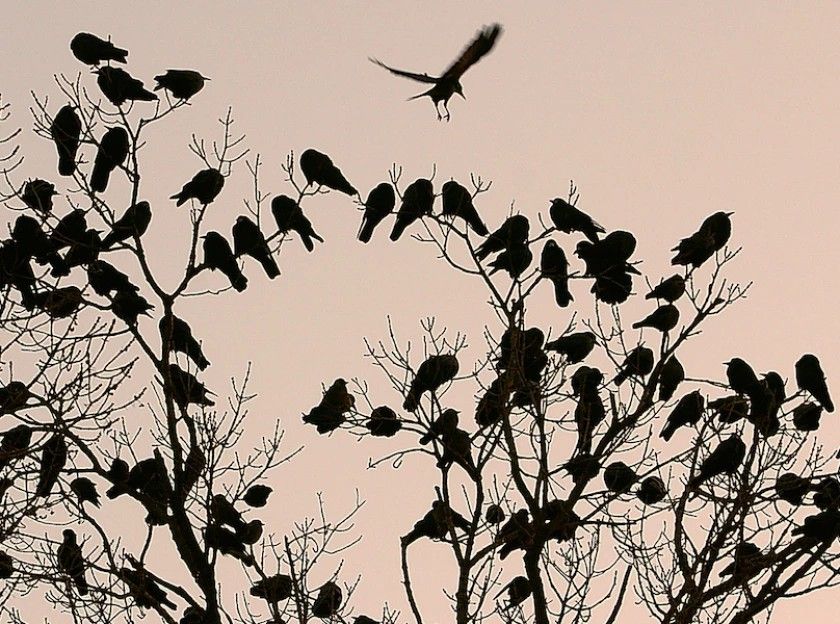
I didn’t think again about the owl until the day before yesterday, I woke early in the morning just at daybreak and looked about a block away at a very, very large deciduous tree. The entire tree was covered in crows. I mean covered. More ornamental than bobbles on a christmas tree.

More crows were attempting to land on the tree but there wasn’t much room, so an occasional displaced crow would fly into the sky while another landed. Suddenly, the sky was filled with crows, heading for that tree from the east.

There were hundreds of crows in the sky, and the crows on the tree flew up into the air as well, turning the sky almost black with a riotous noise of crowing.

At the time, I couldn’t imagine what might be going on that there was such a gathering. Was it an event of the local groups of murders? Was it something in the air, at a specific date and time? Was this an ominous warning from the crows that I should be paying attention to?

All of a sudden and all at once:

they headed towards our yard and like a black cloud they landed in the maple tree next door to our shed and in the maple in our yard. It was mind blowing, to say the least.


What I didn’t know was that Hannah was outside, under this huge flight of crows, so she had a better view of what was really going on.

In the maple tree was a gigantic owl. Could it be the same one that had been warning us on new year’s eve? As the crows came in for a landing, the owl stretched its huge wing span and took to the sky.

Hannah swears that the crows were chasing the owl out of their territory. As the owl took off, the crows lifted from the trees where they had landed and soon vanished.

It was absolutely amazing. I know the Audubon says that we need to accept the crows as the new urban bird. But I’ve struggled with that because they do eat the eggs of our song birds. But it was both beautiful and frightening… ominous.

I’m so glad I woke to see it.

* Merlin is a free bird ID app by Cornell Lab of Ornithology

Hobos and the Cut

Hobos: Men down on their luck

We had a small forested area that ran along the railroad tracks at the end of our street, maybe 3 blocks to the East. The “Cut” we called it.

Trains went (cut) through our neighborhood to cross the train bridge over the Willamette River to the Union Pacific railroad station on the West side.

At night, we could hear the trains chugging by and blowing their whistles. Chug, chug, whoo hoo. It was a mysterious and forelorn sound to me.

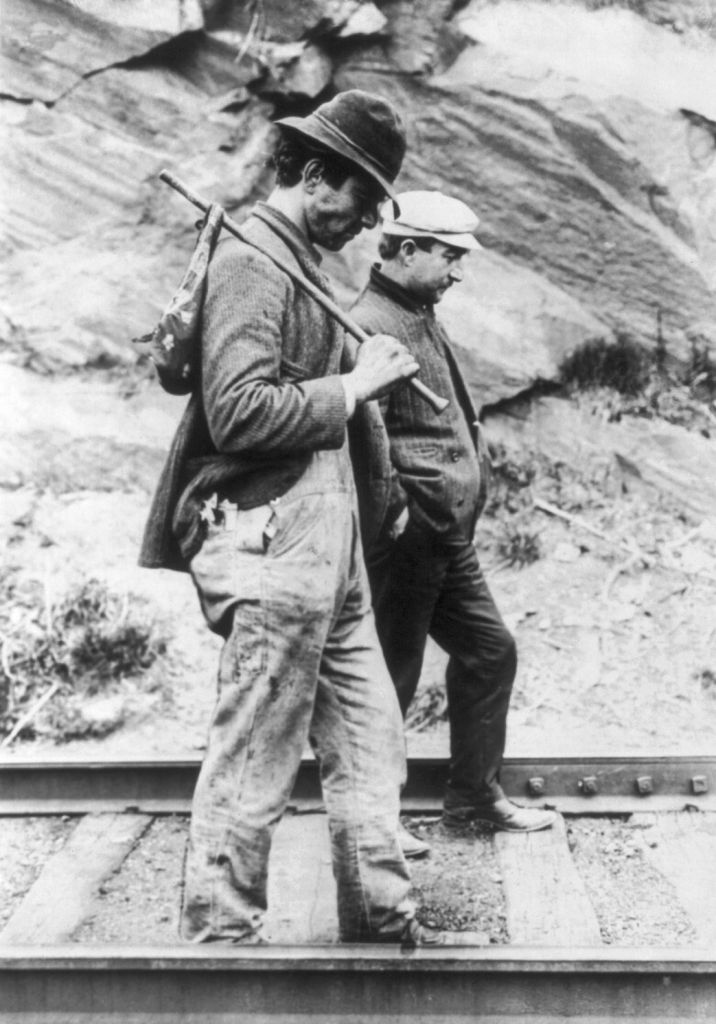
Hobos jumped the train as it slowed to cross the narrow bridge. All the boys were allowed to play in the Cut but were instructed to head for home when the train passed, leaving a group of hobos.

It was a pleasant place to camp out, treed with wild grasses sofening the hard ground. They were out of sight because the tracks were cut deep into the terrain, but we all knew that this was ẃhere the hobos jumped off.

They started camp fires to warm mostly cans of beans. My brother told me this because, being a girl, I wasn’t allowed in the Cut. I was too afraid of those worn and tattered fellows, anyway. Dad, who worked for the railroad, always said they were just men who were down on their luck.

My brother and the neighbirhood boys went down into the Cut as soon as the hobos hopped the next train. They were probably secretly dreaming about one day hopping a train outta there.

They were sure they’d find treasure in the cold ashes around the camp.  Something, anything. But mostly, they found cigarette butts and tin cans.

The boys played hobos, tying a kitchen towel or big red or blue handkerchiefs around the end of a long stick fllling it with cans of beans and peanut butter sandwiches pretending to run away from home. They slung that hobo sack over their shoulder, walking down the street as if they were really leaving.

The hobos never caused a bit of trouble, unlike the “hoods.” The hoods were a group of teenage ruffians from school. They drank, smoked and harassed us girls, and fought with each other in small gangs. They never did much damage to the neighborhood or to each other. They were just tough acting. 

They stormed around the neighborhood in souped-up cars, wearing tight t-shirts and narrow leather belts on their Levis. To our parent’s chagrin, we fell in love with the bad boys.

That’s who our parents should have warned us about, not the hobos.

How many of us girls got knocked up by hobos? None.

How many by the boys? Lots.

His God Will Help

He’s driving a little bit buzzed and fast because he believes he’s above the law.

Got his rocks off with a couple of prostitutes on 82nd and Sandy.

After, while driving home, blue and red lights behind him flashed.

His brown skin alone and that he’s also draped in gold make him immediately suspect.

“Roll down the window”, they shout. Get out of the car, and put your hands above your head. Put your hands behind your head. Spread your legs,” they shout, as they pat him down. Do you have a gun”?

Now, the confidence, the natural bravado drained from his brain and his body. “Yes, I was with a prostitute. Yes, I paid for sex, ” he offers, though they hadn’t asked that question, says he.

They shouted something about red lights and red lights, they keep repeating. His body  shakes. ICE is rounding up immigrants. And what he doesn’t know is that he’s part of a sting. Though he is a naturalized citizen, the news spreads fear… nevertheless.

He doesn’t know how lucky he is. He walked away only the worse for wear. The citation reads: solicitation for prostitution. Nothing about a red light.

He reads it confused and brings it to me. I explained: a class A misdemeanor, up to a year in jail and over a $6400 fine. There’s also a court date.

What he doesn’t know either is that some johns had their cars impounded and were jailed that night. He finds out from friends that his name is published online.

“How many more stupid things are you going to do that I have to help you with,” i hiss through my teeth, over a bowl of phò.

Find a high-powered lawyer. $8500 retainer. Attend classes. Go to court. Maybe go to jail.

Enough money, and his god will help him, he believes. “God did this,” he relentlessly reiterates.

On the stand, he’ll perjer himself. He lies. A big liar. The lawyer will try to keep him off the stand.

Through all of his other petty crimes, he has never had to suffer the consequences. “God helps me,” he says, and he really believes it. I sigh and say, “Money talks.” He doesn’t believe me. He never does.

To Remember

Many, many years ago

I talked to Jack for a long time today. What I love about still being able to be close to him is that our memories are the same and that we share those memories.

My dad, in jest, used to call himself “dirty dog Anderson,” and my brother Steve, when he was in high school, called himself, “Beatleman”. If you saw how he dressed, you would know why.

There’s no one else on earth that would know those things. We have laughed about them now for 60 years. I don’t know if you can possibly know how precious this is to me. If Jack and I were completely estranged, which for a while, I thought we would always be, we wouldn’t be able to share these memories.

My family loved our dog Gypsy so much that when we would see home movies of her, the entire family would be in tears. I found Gypsy, a small, tan, beagle type dog lost in front of our house. Jack and I share this memory. His memory is so sharp that he remembers things in such clear detail that he can fill in areas that I no longer can remember.

He remembered today, exactly the little secondhand shop where he bought me an authentic Navajo ring of carved silver set with a deeply orange/red carnelian stone. I’ve been remembering how much of myself was formed as a young girl from 16 through our entire relationship because of things that Jack said and did. I remember the things that he bought me. He encouraged me to learn and to stay curious.

He bought me art supplies and paid for art classes. He introduced me to music and artists, and literature that I may not have run into on my own so early in life.

He bought me clothes and artwork of all kinds and taught me the value of handmade everything. We shared foreign films on days when we didn’t feel like going to school. Instead, we would spend time in the art museum, in galleries, in cinema houses and the library. We lived in houses with character and historical value. I could go on and on, but I don’t know where we went off the rails.

But off the rails, we did go… some 30 years after we started. We used terrible words with each other, though we knew so many beautiful words. We hurt one another, and yet we held it together for so many years. I’m not sure that we could have salvaged our relationship. I don’t think I could stand it if I thought we could have saved it. It’s easier and less painful for me to think that our parting was necessary for our growth. Just as a plant needs pruning to continue to grow and produce flowers and fruits and vegetables. Sometimes, those plants need to move away from one another and give each more room to grow.

Regardless, I treasure the times now when we do talk, and when we remember. It’s good to know people who have known you through the journey.

And now, as far as my immediate family, there’s just Steve who knew me back when. Maybe it’s our ages, but with these two, Jack and Steve, my life has contiguous meaning.

Warmed by Sheep and Artisans

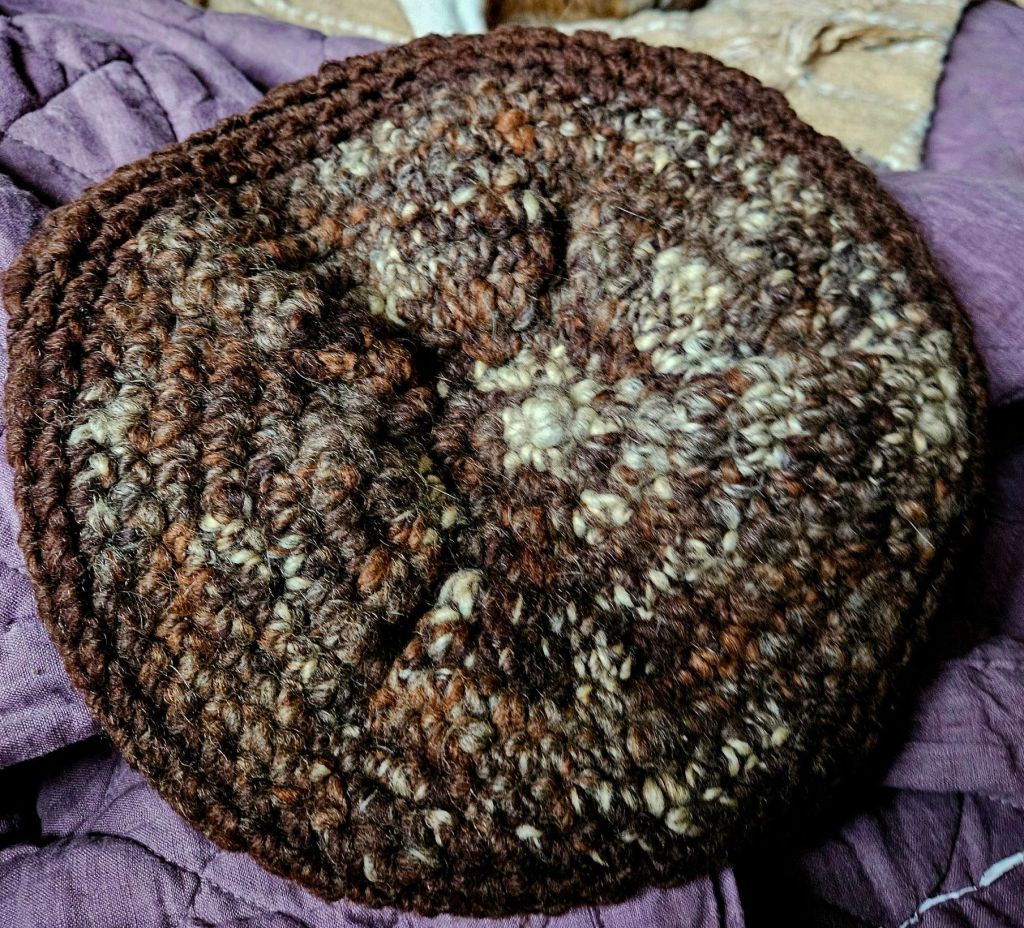
When I was rummaging around my room this morning, I came across this hat that was peeking out of a basket from under other winter wear. It has been years since I paid much attention to it… since I had begun to knit my own hats some years ago.

I, at first, mistakenly identified it as the art of the Cowichan Indians of British Columbia because of the natural colors and unplied yarn used by the tribe to create mostly sweaters and hats.

Sometimes, I’m good at remembering details, but other times, I’m not.

Actually, Jack reminded me that it was the famous Paula Simmons who knit this hat. She was one of the first PNW (Pacific Northwest) artists to raise and shear her own sheep. She processed the fleece, carding, and spinning the fibers, creating the yarn to finally knit garments and accessories like this hat.


With the help of Jack’s memory, he reminded me where we bought this hat. The time frame had to be between 1969 -1972, when we were living in a small house in St. Johns in North Portland. We were just married, and before children. We bought it on a trip to Seattle, Washington, at an art gallery/ craft store at the Space Needle. The store and its name are long forgotten.

Part of my confusion was that I did own a Cowichan Indian sweater, and the hat was created in a similar yarn. I know we bought it before 1972 because I have at least one photo of me wearing it in 1973 – 74, walking through a snowy forest with two year old Hannah, riding on my back. ( I will post the photo when I can find it). That means it would be about 52 years old. (I found it)

The hat, the sweater, the girls, and Skokie the dog

It is knit in unplied and undyed natural sheeps wool. It’s never been washed, and you can still feel the lanolin.  The wool is very rustic and rough to the touch and still causes my forehead to itch, but it’s the warmest hat I own. The wool, in its natural state, is completely waterproof… not water resistant but waterproof.

It is in perfect condition without so much as a moth hole. It could pass for “unused.” This hat is one of my most treasured possessions, and it’s probably worth only a few dollars. The Cowichan Indian sweater was bought around the same time, but unfortunately, it burned in our house fire in 1974-75. I so wish I still had that sweater.

Jack bought the sweater for me when he worked for Norm Thompson. (A thorough history of Norm Thompson Outfitters is interesting and can be found on wikipedia.)

If you’re curious about the Cowichan Indian’s trade in knitwear, please see the following website for more information. Here, you’ll see lots of photos of the sweaters and the knitters, and their fascinating history:  http://knitwithpurpose.com/knitters

I see that the Cowichan Trading Company store, established in 1947 in Vancouver, BC,  has closed permanently. I don’t know what this might mean for the trade in sweaters, but I see that there are stores still stocking them, and there are many new and used online.

Original, authentic Cowichan Indian sweater

All of this interesting stuff because I found my  hat made by Paula Simmons.

Unsolved Mystery of the Heart

Just recently, I found the answer to a mystery  I had given up on resolving many years before. I mostly didn’t even know that I was still looking, but the search was hidden away in my heart to emerge only occasionally.  

There were few things of value that I even cared about because Mom left so little behind. But there were a few of precious value to the heart only. Nothing she ever owned was embued with monetary value.

But there was one mystery to solve, known only to me as, “The  Missing Heart.” I would have found the answer if I had known to ask the right people. Why did the loss of this small charm occur to me again? Oh, yes, I remember! My niece, Sharon, was going through her mother’s (my sister’s) jewelry and came upon a bracelet she didn’t recognize, and neither did I.

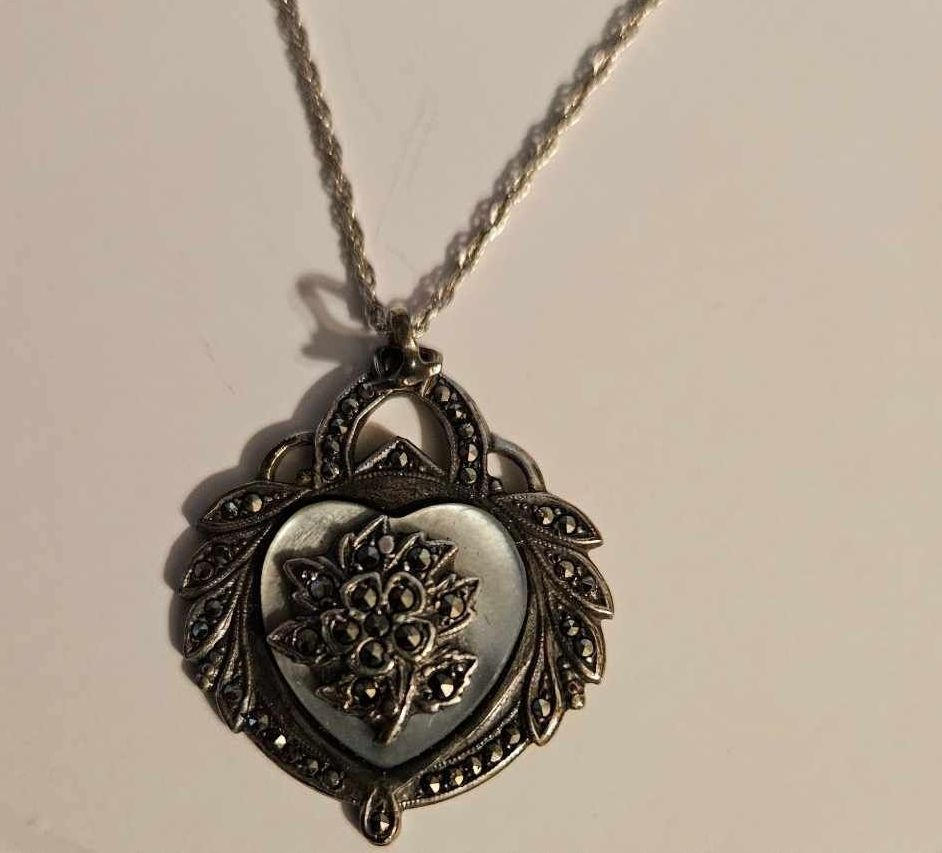
I asked if among her things, had she come upon a small silver and marcasite heart with a mother of pearl inset? At first, I couldn’t remember the stones, so it was hard to describe. Her first answer was, “No”,  she said,  but she would keep an eye out for it.

I looked online to see if I could at least find something similar to help her identify it. Why did I even care, you might ask. Because, as a small child,  like all curious children will,  I loved to look in my mother’s jewelry boxes and in her top drawer to see her linen hankies and soft gloves of silk, cotton and leather, small veils of soft netting, hat pins, hair barretts and other small pieces and mementos.

On top of her dresser, among the crystal bowls, was her hair brush, a handheld mirror, and containers of face and body powder and fancy glass bottles of perfume and fragrant lotions.

There, also sat my favorite music box. It was a small wooden piano with just enough room to hold a few small pieces of jewelry.

The music box

Mom’s dresser was always dusty with the powders she used liberally. Her favorite perfume was Tweed. The fragrance is strong, with the tiniest bit of floral notes to keep it feminine, but mostly, it is dark, moody and earthy, woody, and resinous. Perfect for Mom, but not for a small child or even a teenager. I was never tempted to use it, but it smelled spectacular on my loving yet stoic mother.

But, back to the heart.

I sent my nephews and neices online images of similar items. Sharon said she would continue to look.  She said she would also ask the other girls. My sister had three girls and four boys that she left behind way too early. She also said that there was a story that went with that heart, if the one I was looking for was one that she remembered. I didn’t remember any such story.

Not long after, another of Kristi’s three daughters, Shauna, sent a message with a photo of the heart. “Is this the one you’ve been looking for, Auntie?” she wrote. I couldn’t believe my eyes.

There it was! She explained that her mother had given it to her, before she passed away, to wear at her wedding. Sarah, one of the three daughters, now had it to wear at her upcoming wedding.

She went on to explain the story behind the heart, a story I had never heard: It was a gift from Mom’s first love. If that’s true, why hadn’t I heard it?

I should have been happy just to know that it was still in the family… but. I wasn’t. I was hurt, confused, and frustrated. When did Mom give that to Kristi? Not known to lie nor even to be secretive, could Kristi and Mom have  kept this gift giving a secret? When did this even take place?

I couldn’t be upset with the girls, and of what use is it now for me to be angry with Mom  and Kristi, now that they passed on years ago. I decided to sit with the feeling. I couldn’t shake it anyway.

Now, after a couple of weeks, I guess I’m happy that the heart is in safe and loving hands. Somethings I’ll never know, like when or why Mom decided to give the heart to Kristi. We were and are a close and loving family. I know also that Mom and Kristi hadn’t between them, an ounce of secretive intent.

Each of the girls wore the necklace at their wedding, and if I had it, it would have been enjoyed and cherished by only me.


“I beg you to have patience with everything unresolved in your heart and to try to love the questions themselves as if they were locked rooms or books written in a very foreign language. Don’t search for the answers, which could not be given to you now, because you would not be able to live them. And the point is to live everything. Live the questions now. Perhaps then, someday far in the future, you will gradually, without even noticing it, live your way into the answer.”

–Rainer Maria Rilke, Letters to a Young Poet (1929)

Brogues, Metal Cleats and Family

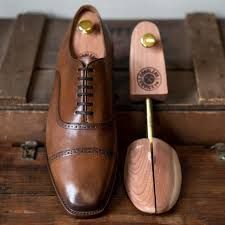
Dad wore large metal cleats on his expensive brown leather Florsheim brogues. These shoes were weekly tended to until they were softly polished to a warm, soft sheen. Even without the cleats, they were heavy. I can still remember the smell of shoe polish and the soft cloth and brushes in Dad’s kit.

Wingtip leather dress shoes

Every day, after he was done with work, we could hear him coming home from the bus stop around the block before we could see him. The large cresent shaped cleats on the heels of his shoes rang out on the concrete sidewalk. We ran to meet him as he rounded the corner of our street.

Cleats

It was a comforting sound that we waited for, even though Mom warned that he would soon arrive and we were to put our toys away and clean up our projects and to clear the walkway of bicycles, scooters, pogo sticks and such.

Mom was usually cooking dinner at this time of day, so she had food ready for him, knowing that he would be tired and worn after a long day. Us kids were to make way for him, so it was a peaceful and relaxing place for him to unwind.

As soon as he removed his shoes, he would put his shoe trees inside to stretch and maintain the elegant shape of these expertly designed and sewn shoes. The cleats were not only music to our ears, they were practical.

Shoe tree

The cleats prevented the heels from being worn down. When the cleats themselves wore down, the edges were  thin and sharp as knife blades. New ones were applied by the neighborhood shoe repairman.

Shoes in those days that had worn out heels and soles were not disposed of but were repaired. My great Uncle Curt had a shoe repair shop where every morning he opened the door knowing that customers would be coming to drop off or pick up shoes. That was when shoes weren’t disposable.

Uncle Curt’s shop smelled of tanned leather and shoe polish. Behind the counter stood a huge black sewing machine and a workbench with neatly arranged hammers and cutters and other tools of his trade and bins of nails and threads and cords of all types and cleats, of course.

The shelves lining the walls were filled with every type of shoe from heavy work boots and workshoes to dainty women’s high heels. He also repaired purses, belts, suspenders, and anything needing his handiwork. There were also a couple of chairs for customers to wait if they just needed a quick fix, like having to replace worn-out cleats.

Dad took care of what was important to him. I remember the smells of banana from the oil when he cleaned his guns and how his tackle box smelled when he cleaned, rearranged and prepared the hooks, the flies, the bobbers, the sinkers and spools of fishing line… and little jars of florescent fish eggs.

When Dad brought out his shoes, guns, tackle boxes, and other stuff to clean and care for, it wasn’t in the basement, not in the garage and not even in the kitchen. It was in the living room where he was in the middle of his family, in the midst of the most important things in his life… in his heart, where he tinkered.

We loved to watch him and ask him this and that while he taught us the value of our belongings and the importance of what we had. But mostly, he taught us to love family.  And we do.

I wish I could hear him coming down the street today. He left us way too young. He was only 52 years old when he passed away. But he left an indelible mark on us all. I insisted on wearing taps/cleats on my shoes, too, just like Dad. I wanted to be just like Dad… I hope I am.

The Hardest Words

There are some words that hurt more than others.

There are a plethora of songs and poetry and of  stories written about heartbreak. I have had my share, but there are some that still break my heart that are still etched in my memory.

These words hurt so badly because I knew at the time that they were true. 

These pierced my heart, and I thought I might die. If you know, if you’ve loved like I’ve loved, you know how bad it feels to lose someone.

As we lay beside one another, he said softly…

“I don’t love you anymore. I know how much you love me. I love her like you love me.”

Why did he have to say those words? It would have been easier if he had just left. It would have been easier not to have heard them.

Some words we can never forget.

Why did these words come to me today? Like any kind of grief, it washes over you like the waves of the sea, and you have no control over your heart and how they make you feel. It was a song that brought them back.

Auntie Wilma and Cinnamon Toast

Yesterday, I was going through old photographs and there was Auntie Wilma, her midriff top pulled off her shoulders, in shorts and looking quite glamorous. So, I’m eating cinnamon toast in her honor today. Sometimes after school she would come over and we’d make cinnamon toast and eat until we had finished the entire loaf of bread. It was the same when I went to Grandma’s house when Auntie Wilma came over.

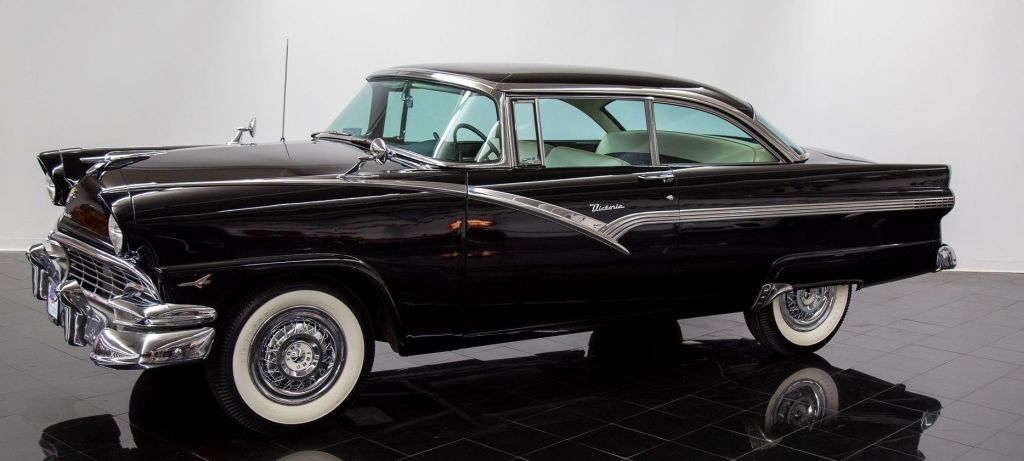
If I could wish for everyone something good, it would be that they grew up with an Auntie Wilma. She drove an all black Ford Fairlaine, totally tricked out in chrome with big fins. The back seat was littered with candy wrappers, empty bags of chips, and empty soda bottles.

Auntie Wilma’s 1956 Ford Fairlane

When I was in grade school, she worked as a soda jerk in the bowling alley across the street from my school. Mom and Dad forbid us to bother her on the job, but occasionally we’d get to go in to get a chocolate milkshake… on the house. I was so proud of Auntie Willma and loved to see her coming and I loved to tell my friends that she worked in the bowling alley and she was MY aunt.

Sometimes on the weekends, if there was a bowling tournament, she would pick us kids up and take us to watch her bowl and to eat all of the chips, and sodas, and ice cream we could stuff into our mouths. Either on our way to the bowling alley or on the way back home, she would surely stop and buy us hamburgers and milkshakes that we were allowed to eat in her car. If we asked her where we were going, she would always answer with one word, “Timbuktu”. We had no idea what she was talking about but we were just so happy to be hanging out with Auntie Wilma. Later, I found out that Grandpa used to answer her that way when they would go out for drives.

Auntie Wilma had shelves with trophies for swimming, for diving, for bowling, and golfing. She had a great figure and loved showing it off. She loved going out dancing and was an award winning jitter bugger. When I was in high school, she liked coming over, not only to eat cinnamon toast but to show me that she could fit into my clothes. She loved flirting with my boyfriends. I think they liked it, too.

As a child, there was nothing better than having Auntie Wilma come over or to take us out in her big black car. When I was about eleven years old, she adopted a child. Occasionally, I would babysit for her because she was usually working as a night bartender. I thought she was quite lucky and lived an exciting life. And I was lucky because she would bring me home Chinese food or some other food from some bar or restaurant where she was working. She’d wake me up after 2 o’clock in the morning, and we’d share the food and we’d talk. Now, I can’t imagine what we had to talk about, but we were close.

It wasn’t until I was an adult that I found out that Auntie Wilma rarely made good choices in her life. She must have been the source of a lot of pain and suffering for Grandma and Grandpa. There’s some really bad things that she did in the family that I won’t mention here, because I loved her so and this is a post about me honoring Auntie Wilma today with cinnamon toast. It hurts me to think about those things because when I was younger she was magical.

No matter what, she was loved, and she loved us. Only if you had someone in your life while you were growing up, like Auntie Wilma, will you understand what I mean. I don’t even know if she was happy or not. All I know was that she was pedal to the metal. I don’t ever remember Mom and Dad saying one negative word about her, not even to warn us against turning out like her. Before I knew better, I practically worshiped her. I know better, and I’m glad she was not my only role model but only one of them because she was fun as hell.

PS: While looking at more photographs this afternoon, I ran into photos of Auntie Wilma in office wear, looking very professional. Somewhere tucked deep in my mind are memories of hearing that at some point she had office jobs, maybe even before I was born or before I was totally aware that she was my aunt.

To be fair. I also want to mention that she was a great fisher and hunter of, in particular, venison. We often went fishing with her and often went to the beach with Grandma and Grandpa and Auntie Wilma. Dad, Auntie Wilma, and Grandpa would swim out into the frigid Pacific Ocean and have been known to swim with seals.

No matter how much I write about her it doesn’t seem to be enough.