In my last post, I shared a brief memory of my grandmother and the woman she always referred to as her “nanny.” I was inspired to write it after reading a troubling post on Facebook where someone recounted a family using the N-word for their household caregiver. It shook me, because in my very large family, I have absolutely no memory of anyone ever using that word. My grandmother never used it. She spoke of her nanny with fondness and respect, and that was the standard of decency she passed down to us.
However, as a professional archivist, I know that oral family histories are beautiful but imperfect things. They have a way of compressing time, blending generations together until the timelines blur.
Shortly after publishing that post, I received a note from my dad’s cousin, Carolyn. She is the oldest living relative of that generation, and she is wonderful at keeping our history straight. Carolyn gently pointed out a major flaw in my timeline: because slavery was abolished in 1865, and my grandmother was born well after that, she could not have had an enslaved nanny.
Carolyn was entirely right about the timeline. The woman my grandmother remembered so fondly from her childhood in Kentucky was undoubtedly a hired domestic servant or worker.
But Carolyn’s correction got my archivist wheels turning. While the nanny of my grandmother’s youth was free, I knew the stories I grew up hearing about our ancestorstoal tales of vast tobacco crops and prized racehorses in Greenup County, Kentucky. My historical intuition told me that an operation of that scale required a massive amount of manual labor. I decided to dig into the archival records to see exactly what kind of world my grandmother’s people came from.
What I found was a heavy, complex history.
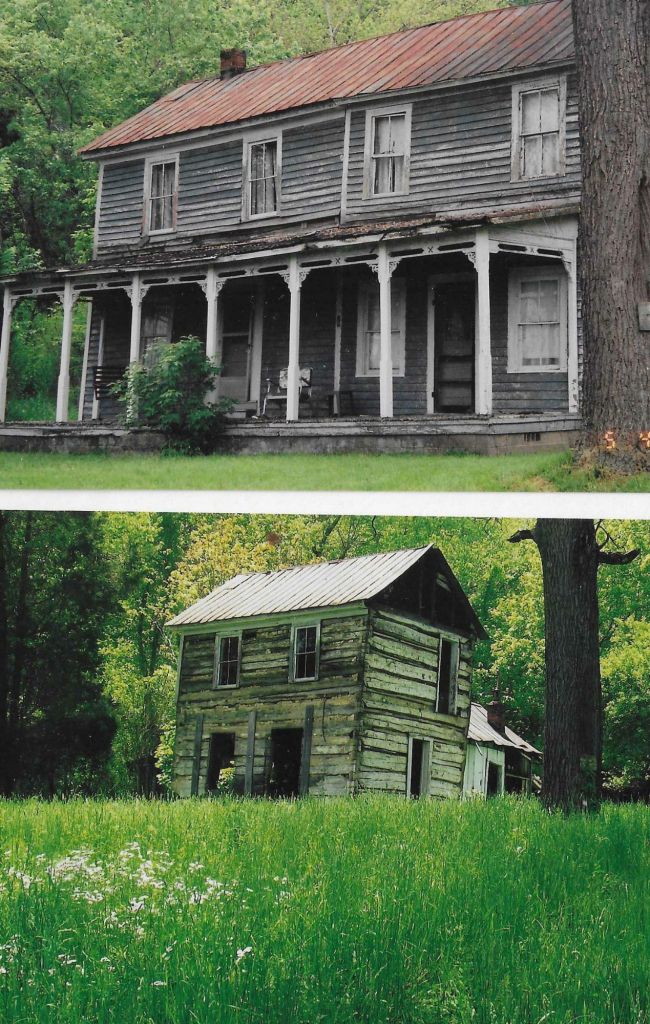
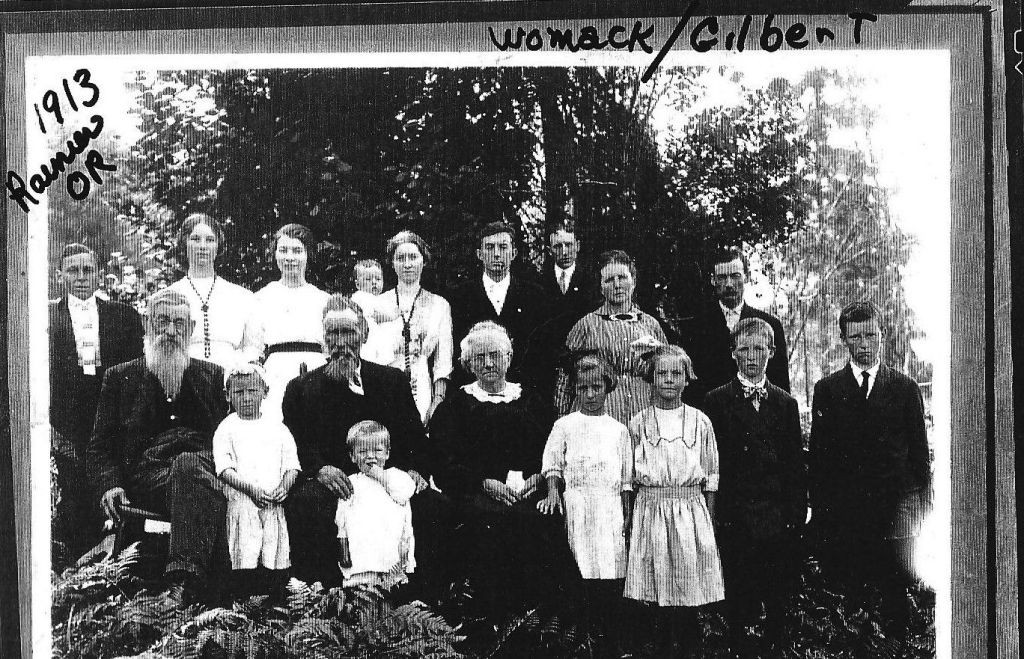
The Womack line in Kentucky was established by my great-great-great-grandfather, James Tignal Womack, who moved his family and his wealth from Prince Edward County, Virginia, to the Little Sandy River around 1812. When he passed away in 1827, his will divided twenty-three enslaved individuals among his heirs.
His son, Archer Tignal Womack, settled in Oldtown, Greenup County. The federal slave schedules show that he held eleven enslaved people in 1850 and seven in 1860. In the hilly terrain of eastern Kentucky, owning that many people made him a substantial slaveholder. This labor force directly matched the stories of large-scale tobacco farming and horse breeding.
Because Greenup County sat right on the Ohio border, it was a hotbed for the Underground Railroad. Local newspapers from January 1859 even document a “panic among the slaveholders” after two young enslaved men successfully escaped from Archer Womack’s farm, prompting him to sell others further south for security.
My great-great-grandfather, William Archer Womack, grew up directly inside this environment. When the Civil War broke out, he held intense Southern secessionist sympathies. He was eventually arrested by Union forces, treated as a prisoner of war, and sent north to Camp Chase, a notorious military prison in Columbus, Ohio, before returning home to Oldtown as a businessman after the war.
Discovering this census and military data didn’t change the timeline Carolyn corrected, but it gave the story a much deeper meaning.
My grandmother was raised by people who had actively participated in, profited from, and fought to defend the slaveholding South. Yet, somewhere along the way, she made a choice. She broke the cycle of prejudice. She refused to carry the dehumanizing language of that era into the ears of her children and grandchildren.
“From dust we came, and to dust we will go”, she oft-repeated. and perhaps it is in recognizing our shared dust that my grandmother found her grace. The woman she loved as a child may have been a hired servant rather than an enslaved nanny, but the true miracle of the story is that my grandmother chose to look backward at her family’s history, and then chose to walk forward with love.
I will be bringing a great deal more history in subsequent posts. Stay tuned if you dare.
In bringing this historical documentation to light, I have gratefully utilized AI as a digital tool and editorial assistant to help research, structure, and refine the narrative. However, the intellectual framework, the emotional weight, and the driving motivation behind this work are entirely my own. This remains, above all, a direct reflection of my own voice and my deeply personal desire to ensure this history is remembered.
I listened to a story on Facebook, I think it was, that was much like this story but also was different. And I’ll tell you why. But it reminded me that I should probably write this down because I’ve already forgotten so much of it.
My grandmother told me this story countless times. I never tired of hearing it because it was so strange and so different from anything that I knew as a white girl, living in the Pacific Northwest. I would picture, in my child’s mind, their nanny, washing clothes outdoors in a wash tub, on a washboard. I don’t even know if that’s an accurate picture.
I believe it was her great-grand parents who owned slaves in Kentucky on a plantation they built themselves. According to Grandma, Grandpa was infamous for “being as kind to his slaves as he was to his race horses”. They grew sugar and tobacco. And I don’t know what else.
There were nine kids in Grandma’s family, but their house slave had twelve children. Grandma grew up with this house slave. She knew her house slave’s, name, and all twelve of her children’s names. This is where the story I read on Facebook differs from my own. They called their nanny the “N” word but not thinking they were saying anything wrong. (Translate: racist).
Grandma and her siblings would dance around their nanny singing, “tell us the name of your children, “nanny”, but using her real name. I guess it was because her children’s names sounded strange to them.
The nanny would go along with grandma and her brothers and sisters until she tired of it. She then shood them away, saying that she would “soap them all up with a bar of soap and swallow them whole”. Then, they would all run away, screaming as though their nanny had turned into a monster.
Grandma told this story to me over and over again. Among other stories, never, I don’t think, realizing the racism of having only black people working for them. Grandma thought of this nanny as one of the family.
But after her work was done, scrubbing their clothes, cooking, cleaning their house, watching after all the children, she went home to her own home, which was more than likely a “house” on the plantation grounds and do all the same things for her children.
I don’t ever remember her talking about any of the other slaves. Her grandfather’s father had come to Kentucky from England. He moved to Kentucky with a black man, either slave or friend, I do not know. They first built a small cabin. Then grandfather or both built a home and then built the plantation. This black man had a name. And it’s written down in history, but right now, I don’t remember it. Grandpa became a wealthy man on the backs of his slaves.
Still, our family is the wealthiest family in that countyl. I must say that wealthy is a relative term in this day and age. When grandma’s father and mother decided they wanted to move west to Rainier. Oregon, Grandma would tell the story of leaving their nanny and all nine children gathered around her, crying and tearing at her apron and trying to hold on to her. Say what you may, they believed they loved her. And they believed that she loved them.
When Grandma would tell me this story, tears would always come to her eyes. She never ever used the “N” word nor did any of her brothers and sisters speak of their nanny in any negative way. But the story of dancing around her and pulling at her apron strings and chanting “tell us the name of all your children” she didn’t see as racist.
At one time, I wrote this story down. But I can’t find that story any more, and my memory does not serve me as it should. I forgot the nanny’s name long time ago. The only one of the children’s names that I can remember is, Ethelial”… her oldest boy and the name that she would tell them first.
This is by no means the story of my grandma and her ancestors. It’s just a thought I had when I heard the story of this other person who used the “N’ word to talk about their black nanny, and I remembered grandma never doing that ever. I’m not saying that she was any less racist. I’m just saying they didn’t use the “N” word.
I still have a living relative, my dad’s cousin, who reads my blog. She has a wonderful memory for these things. And she might read this blog post and make corrections. I welcome them.
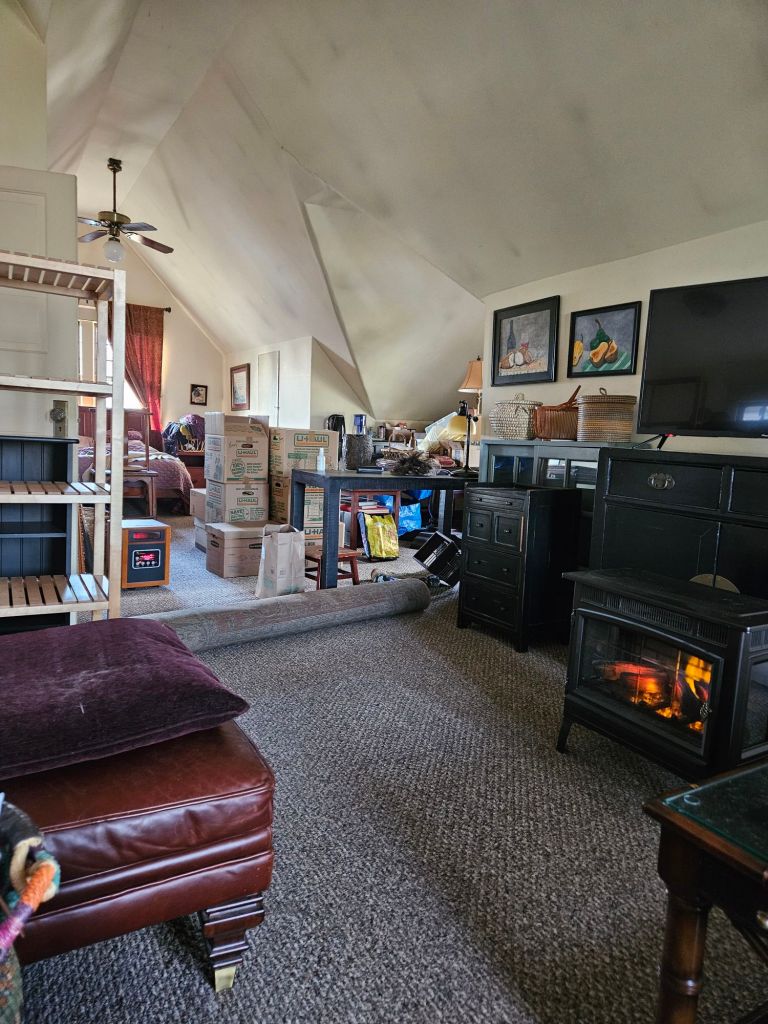
After 13 years of living together with my daughter in a big old house in NE Portland, with my two grandchildren, it’s time for us to part ways. The children are grown and my daughter is seeking her freedom.
If it were plausible and possible, I would stay here for the rest of my life. But now that I’m 77 years old, it’s time for me to have found cheaper digs and fewer stairs.
I’d be lying if I didn’t say that I’m full of trepidation about my physical well – being. I survived polio at 5 years old that left me with a weak right arm, the deltoid not having survived the paralysis. I also survived a terrible bout with cancer and 8 months of chemo when I was 56 years old. One does not escape cancer or chemo unscathed.
I’ve had a very eventful and adventurous life. I went full bore into it. Because of this, my body, my soul, my head and my heart are full of memories. I realize now that there are fewer years ahead of me than are behind me and I fully enjoy reminiscing and writing about my life.
I have said this before and I’ll say it again. I’m not afraid of dying, but I am afraid of living. Age is taking its toll on me with crackling joints and weakening muscles, a slower and less elegant gait and increasing girth.
I understand fully our vulnerability. We are assailed on all sides by decline and a world made very scary by other humans, natural disasters and accidents and by other living things and the intervention of technology. But I have lived bravely and brightly.
So because of my age, I admit to some fear about moving on my own into unfamiliar territory and at this age, when I am not in my prime… not even close to it. And we are living in uncertain times. Let’s not get into politics, except to say:
I would be foolish to not wonder if this country will continue to support me with MY Social Security and MY retirement fund, which I have earned and are not a hand out from the government.
What began this story was when a friend asked if I were worried about my daughter going basically on her own without children and without me. I responded with a resounding, NO! and here’s why:
At her age, I had been divorced. Had started going to university. Spent a year in Mexico, including a semester at the University of Queretero and traveled throughout Mexico with the curator of the Museum of Art of the same cty.
Upon returning I had an amazing 3 year affair with a beautiful Cuban. Moved to Tallahassee on a fellowship, traveled cross country on a train. I found shortly after one semester that the deep south was not for me.
So I moved to Santa Monica to attend UCLA on another fellowship. By that time, I had finished 11 years of university at 5 different schools. I moved back to Portland and started a beautiful career at OHSU as their first and only professional archivist, retiring after 16 years.
When I moved back to Portland, I moved my mother in with me. Fell for an Indian Sikh. Had cancer and survived surgery, and 8 months of chemo. My mother and I lived together 8 years when she passed away. She stayed at home with me until the day she passed.
Since moving back to Portland, I had moved 4 times by the time I moved in here with my daughter. And now, here I am, moving again, not totally by choice.
So do I have any worries concerning my daughter?
She is made up of the same stuff as I am and maybe more. It’s her story so without giving any detail, I will just say, she got her massage therapy license while she raised two children alone and finished her BS degree. She’s now Spa Drector where she has worked as lead therapist for 14 years. She supports herself. She’s physically healthy and strong.
Nope, I’m not worried about her at all, any more than any mother would. For sure this is more about me than about her. But when my friend asked, if I was worried about this time of change, it caused me to reflect on life. Actually, I look forward to hearing about her adventures from here on out, about her brave and bright life.
I wanted to tell you something just in case I forget. It was New Year’s Eve and…
we were out on the sidewalk about to get in the car to drive to a party. We were stopped in our tracks and we quickly hushed. Was that an owl? Yes. It had to be a big owl because it had a very big voice and its message was urgent, if I might extrapolate. It was in the fir tree next door to our house.
I was surprised because I hear owls all the time in our yard, but they’re small owls. Neighbors have been able to catch photos of them but I have only heard them on *Merlin. We live just blocks away from a large park where predator birds are regularly seen.
This might have been a forewarning of what was to come at the party that evening.
The story is about crows and owls and not the disturbing occurrence at the party that night. But there was a huge upset that evening. We left the party early. I didn’t think of the owl’s presence and warning until days later.
On our way home, we drove downtown to look at the Christmas lights and the street parties going on. Cafes, bars and restaurants were in full party mode. People filled the sidewalks and were walking al】nd standing in the streets as music emanated from indoors.
The annual Christmas tree in the square was lit up and probably could have been seen from space. The theaters were emptying out after shows onto the streets.
In the square, live music was playing, and it was packed out with people streaming in, dancing and laughing and talking. Everyone was in a party mood.
On every street corner, there were people selling the most amazing lights suspended on poles. They looked like giant dandelion seed heads of iridescent colors swinging in the night air.
In spite of the upset at the party, the night ended well. When we got home, we made mimosas and stayed awake until the clock struck midnight and we welcomed in 2026.
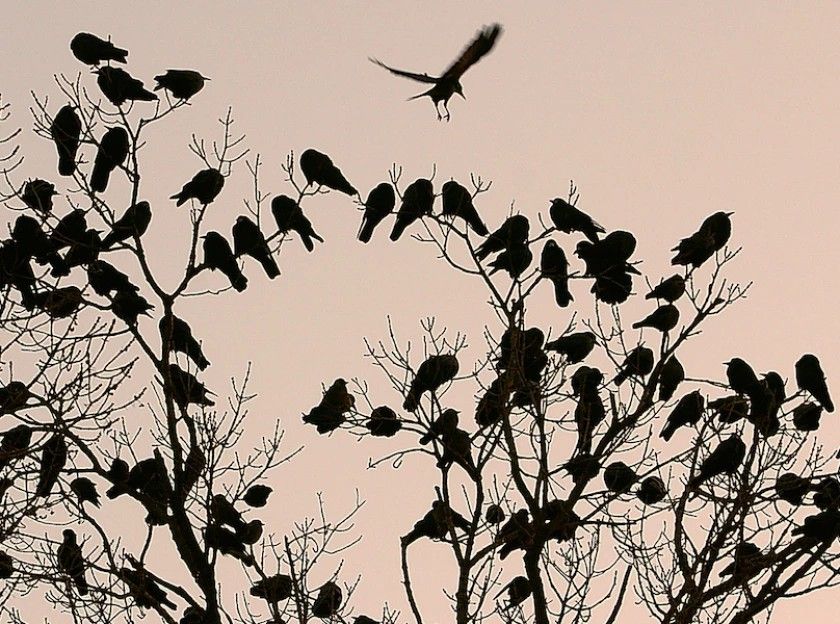
I didn’t think again about the owl until the day before yesterday, I woke early in the morning just at daybreak and looked about a block away at a very, very large deciduous tree. The entire tree was covered in crows. I mean covered. More ornamental than bobbles on a christmas tree.
More crows were attempting to land on the tree but there wasn’t much room, so an occasional displaced crow would fly into the sky while another landed. Suddenly, the sky was filled with crows, heading for that tree from the east.
There were hundreds of crows in the sky, and the crows on the tree flew up into the air as well, turning the sky almost black with a riotous noise of crowing.
At the time, I couldn’t imagine what might be going on that there was such a gathering. Was it an event of the local groups of murders? Was it something in the air, at a specific date and time? Was this an ominous warning from the crows that I should be paying attention to?
All of a sudden and all at once:
they headed towards our yard and like a black cloud they landed in the maple tree next door to our shed and in the maple in our yard. It was mind blowing, to say the least.
What I didn’t know was that Hannah was outside, under this huge flight of crows, so she had a better view of what was really going on.
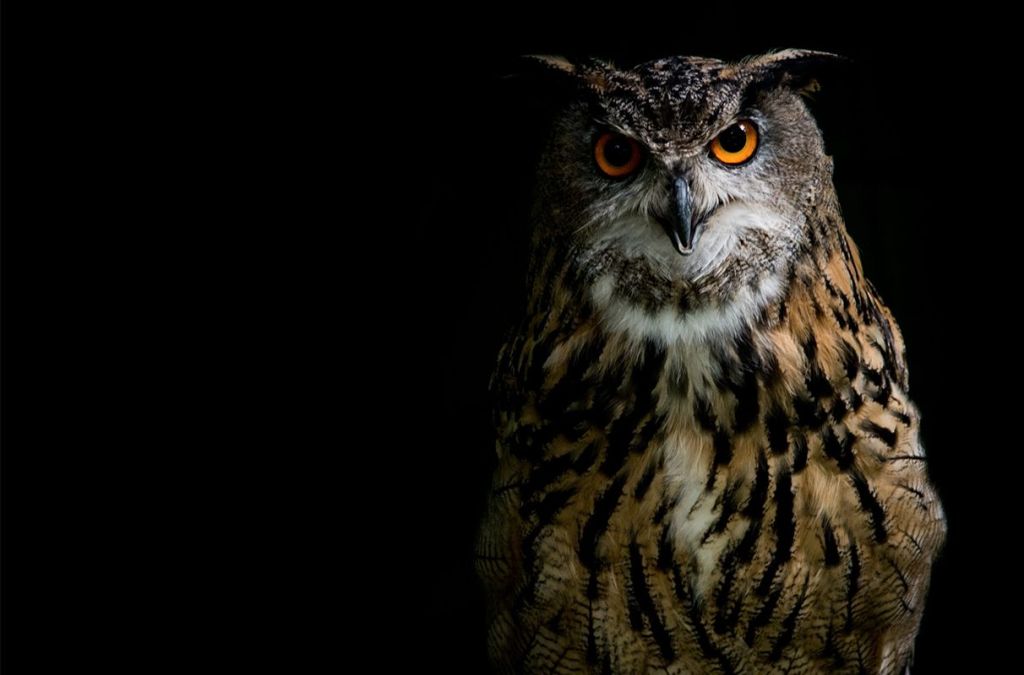
In the maple tree was a gigantic owl. Could it be the same one that had been warning us on new year’s eve? As the crows came in for a landing, the owl stretched its huge wing span and took to the sky.
Hannah swears that the crows were chasing the owl out of their territory. As the owl took off, the crows lifted from the trees where they had landed and soon vanished.
It was absolutely amazing. I know the Audubon says that we need to accept the crows as the new urban bird. But I’ve struggled with that because they do eat the eggs of our song birds. But it was both beautiful and frightening… ominous.
I’m so glad I woke to see it.
* Merlin is a free bird ID app by Cornell Lab of Ornithology
Family Beach Trip: From left, back row: Dad, Mom (Kristi in Mom’s arms) Grandma, Grandpa; Front row: Steve, Me
When I was a young girl, my grandma was everything to me. She was Dad’s mom. I never knew Mom’s mother because she passed away before Mom even had a chance to grow up.
Even though she lived just around the block, I had to go and stay with her as often as I was allowed, and I was always allowed because my parents knew the special things that Grandma and I had together.
I think Kristi and Steve were too busy to spend much time at Grandma’s house unless it was a family affair. Grandma used to say that Kristi wanted to spend the night but once it started to get dark, she wanted to go home.
Sometimes we just sat on the front porch steps and watched the world go by or at night we looked up at the stars until I was too tired to stay awake any longer. On either side of the porch were large Mollis Azaleas, one a dusky yellow and the other a coral orange. The sloped grassy yard was green and weedless, because Grandma pulled up dandelions on her hands and knees, never having to use weed killers. Grandma never asked me to pull weeds with her, but I wanted to because I wanted to be near her and I wanted to do everything that she did.
When I was old enough, I could count on getting to go to Ralph’s grocery store by myself. It was just about a block and a half away but it always felt like an adventure. The store was small but held everything a person could want. Ralph was the owner but also a butcher. I remember well the glass-fronted coolers filled with fresh and luscious-looking meats and the smell of house cleaning products on the other side of the store. One could buy laundry detergent and that night’s dinner at Ralph’s.
Ralph knew all of the neighborhood families. As children, we could always ask for beer or cigarettes to take home. Those were the days when kids, I think, were more trustworthy. Grandma occasionally smoked a cigarette. Nobody wanted her to smoke and she never smoked in front of anyone, but she would ask me to bring a certain brand of cigarette to her sometimes. I don’t think I cared. I think I was fascinated by this sweet gentle white-haired woman in a dress or housecoat, smoking a cigarette.
Grandma didn’t can or make fresh cookies but she always had canned applesauce and pork and beans in the metal. cupboard by the sink. In the top drawer of that cupboard, she had store-bought waffle cookies or oatmeal cookies. Grandma was a really good cook as Thanksgiving dinner attested, but dinner at Grandma’s regularly for me was hot dogs and pork and beans and applesauce.
Company dinners might include potato salad, crab or shrimp louis’, fried chicken, and fresh baked dinner rolls. Sometimes chili, navy beans and hamhocks, meatloaf and mashed potatoes and gravy. and the like.
Grandma made a special dessert that, as far as I was concerned, she didn’t bake often enough. She made a cinnamon roll dough, rolled up apples and sugar and cinnamon on the inside. Then she made a sweet syrup that she poured over the top and put it in the oven to bake until it was sticky and delectable. She served it in shallow bowls and poured sweet cream on top.
Summertime meant watermelon. And I mean watermelon. Not those weak, sickly small watermelons that you find outside of the supermarkets in bins touting proudly, “seedless”. They actually should always write on the sign, “seedless and tasteless”. No, these were watermelon, the size of a small child full of plump black seeds. These were so sweet and full of water that on the hottest days they would quench your thirst. Grandma and I could almost eat a whole one of an afternoon, spitting the seeds into the freshly turned dirt in hopes of growing a watermelon.
Grandma grew up in Kentucky on a plantation. Ohh, the stories that she would tell. She said that in the summertime they’d carry a knife and any watermelon growing out from underneath a fence on the side of the road was fair game. So she knew how to pick a watermelon. I don’t remember her ever saying, “oh, this one is mealie, or this one is dry or this one is tasteless.” Every watermelon that she picked was perfect.
In the late afternoon or in the evening, Grandma would sit on one end of the couch, and I would lie on the other with my feet in her lap. Lying there on the couch, Grandma would peel oranges… as many as I wanted, even five in a row. We’d watch TV, especially the Lawrence Welk show every Saturday, or was it every Sunday? I don’t remember but we never missed it. Grandma would always say, about every man on television that he was a good Christian.
When Grandpa was still alive, they used to watch Billy Graham and Oral Roberts and pray for my arm to get better. Since I had polio, when I was only five years old, the deltoid in my right arm never recovered. When one of the two of those preachers came on the TV, Grandpa would have me sit on the floor between his feet and he would lay hands on my shoulder and pray with the preachers for me to be healed. It didn’t work, but they never gave up, always true believers.
Before Grandpa died, he was a cooper. Like a lot of men who worked with wood and saws that had no safety features, he was missing most or part of every finger. Grandma packed him a lunch every day. I don’t know how he knew that us kids would be at his house when he got home from work, but it never failed that he left us something in that metal lunch box every time. He was a loving family man, a hunter and a fisherman who had black labs. But that’s a different story.
Grandma had a high four poster bed in her small bedroom. Her sheets and pillowcases were always crisp from hanging on the line outside in the summer or on the line strung up in the basement with the large oil furnace for heat. We’d talk until I fell asleep. I never kept a secret from Grandma and as I began to drift off if I heard a siren, my first thought was that my Mom and Dad and Kristi and Steve and Gypsy were safe at home. That was ever my only worry because I felt safe with Grandma.
On top of the high boy dresser was a photograph of Dad in his army uniform when he was only 18, drafted into the army to fight in World War II. I can only imagine Grandma praying and crying while Dad was overseas in the Philippines.
On another dresser was a brush and a handheld mirror and Grandma’s favorite creme perfume, Avon’s Roses Roses. Inside the top drawer was the forbidden Pond’s Cold Cream. When I was young, I had very sensitive skin and if the cold cream even came near me, I would break out in a rash. But after a bath in the big claw foot bathtub, I would go into the bedroom and slather on Pond’s Cold Cream all over my face. I wanted to look and smell just like Grandma. When I went home or if Mom came to pick me up, and my face was red and swollen, she would scold Grandma for letting me use her lotions. But Grandma was innocent, she could deny me nothing.
As I grew up, when Grandma took a bath, I’d wash her soft white back that bent to help any person in need. She worked as a nurse’s aid in the nursery at St. Vincent’s Hospital, taking care of the little newborn babies. She loved and cared for the family. She cared for her neighbors. When Grandpa had a stroke, she took care of him. Though, I always thought of Grandma as strong yet tender, I mostly thought of her as an angel.
One of my favorite times at grandma’s houses, was when her sisters came over for coffee. They sat in the kitchen nook around the formica table, chatting, eating cookies and drinking coffee from Grandma’s special cups. She had Fiesta Ware and some other set that had a plaid motif. My favorite color in the Fiesta Ware, was indigo blue. But my coffee was more milk and sugar than coffee. As I sat and listened to them talk, i understood nothing but I felt like I was one of the grown-ups. Eventually, I’d lose interest or run out of coffee and go outside to play in the summer or onto the couch to read in the winter.
I loved sitting in the nook. Above the windows over the built in bench, hung the crab shaped plates that Grandma took down when she made her crab and shrimp louis’. And in Grandpa’s sweet and thoughtful ways, he built a long, narrow window with glass shelves, along side the back door where grandma kept knick knacks that shone in the sun.
Grandpa had transformed the back porch into that kitchen nook, and created a bedroom in the back of the house. As I grew older and bigger, I sometimes slept in the back room. Grandpa had built a niche in the wall and it was filled with paperback books, written by authors like Zane Gray, and other Western authors, there were also, National Geographics, and condensed versions of the Reader’s Digest.
In that long “Back Bedroom”, as we called it, was where Dad and Auntie Wilma had their bedrooms. At either end were matching single beds with a lamp over the head of the bed for reading. I remember only one dresser, but there must have been two and there was not a closet. This is where they grew up in this small but loving house.
Growing up, Thanksgivings were always at Grandma and Grandpa’s house. There was no dining room as such, but the large dining table was open to its full length at the end of the living room to accommodate us all. The front door had Grandpa’s unique signature. He had inserted a ship’s porthole in the heavy wooden door in contrast to the beautiful leaded windows in the rest of the room.
One accessed the basement from outside the house and down narrow cement stairs that led down to the dark unfinished basement that held the enormous oil furnace with octopus-type arms rising to meet the vents in the floor above it. When the furnace fired up, you could hear it ignite and the large fan blowing hot air up into the house. It was a comforting sound. Grandma’s favorite setting on the thermostat was 80°. That was just perfect for the two of us. I still like to have a very warm house in the winter.
I can recall the smell of the dirt floors in the basement and the oil tank and the dampness. I remember the cobwebs with spiders and the yellow boxes of “Slug Be Gone” with pictures of slugs on the front and warnings on the back. And the long tubular boxes of rose fertilizer. To Grandma, her flowers were precious, as was the large Dutch Elm tree that shadowed one side of her yard.
Years after I was grown, the tree got the dreaded Dutch Elm disease and it failed and had to be removed. To me Grandma’s backyard was never the same. The yard’s salvation was the large Mountain Ash, which fed the birds it’s brilliant red berries. When Grandpa built the bedroom and the nook on the back of the house, he and Grandma planted beautiful hydrangea bushes that grew to almost the roof line. There in the north facing shade of the house, the hydrangeas thrived in wet dirt that always had a bit of green moss growing. When those were removed to accommodate a cement, patio, it broke Grandma’s heart.
When Grandma and I would wake in the morning, we would sit at the table in the nook and watch the birds in the bird bath. I think this was Grandma’s favorite activity. And because Grandma loved it so, it became my favorite activity, as well. It still is. When we were at grandma’s house, her backyard. was our playground.
All summer long, we played in the sprinkler, running in the soft thick green grass. There were bouncy metal chairs and a wooden lounge with a thick heavy rust colored cushion and a large wooden picnic table.
There was always in abundance, applesauce and hot dogs that we could eat anytime we wanted, and cans of Pork and Beans and packaged oatmeal cookies, or the kind that were like rectangular crunchy waffles and cream frosting layered in between. If any of the family stopped by for just a minute or two, she insisted on one taking a paper bag with a package of hot dogs and cans of pork and beans and applesauce. She couldn’t stand the thought of any of us being hungry.
In my heart and mind there was never anyone better than Grandma.
I was going to save this for a different blog post, but I’ll just mention it here. Grandma and I mourned the tragic death of my dad, her son together. Dad died in a car accident at the young age of 51. For the rest of her life, grandma never quit saying that children should never die before their parents. For months I never stopped chanting “no”. I was 9 months pregnant. Our entire family was devastated. We were profoundly changed by this event. Perhaps Grandma more than anyone. But in many ways she was my solace.
One day Grandma died. Some boys accosted her, knocking her down on the street as she walked to the store. They stole her purse. She was never the same after this. It wasn’t the fall. It wasn’t about the money. But paranoia set in. It was her identification. They knew where she lived. Now, most often her blinds were closed. Her doors that were always open were locked. She stopped walking to the store alone. Eventually dementia set in.
Auntie Wilma and mom alternated staying with her, so she was able to stay in her home until she passed away. Eventually, she thought she was being kept against her will at the neighbor’s house. She worried constantly that she needed to be home to fix meals for her family.
I won’t say that this was easy for me. The last time I saw her alive, she was sitting in her chair in the living room. She wanted some assistance to get up. I walked over to her, reached out taking her arm and her hand and gently tried to help. Suddenly, she yelped like an injured animal and cried out, “I never thought you would hurt me and now you’ve broken my arm”. Of course, she was not injured in any way, but this hurt more then I could ever have imagined. To this day, I feel those words as though it happened yesterday. Of course, I know that this was the dementia talking, but between grandma and I, there had never been a crossword spoken between us.
I never saw her again after that day. I couldn’t bear to see my dear grandma crying. I have the memories. I think sometimes I can smell her Avon Roses, Roses, cream perfume and Ponds cold cream. I sometimes think I can feel her soft hands and hear her gentle voice. I wish I could sit in her garden again. I wish I could feel her strong arms around me once again. And I wish I could wash her back once more.
I remember the smell of The Little House. It smelled a little like dirt and mildew and of the oil stove sitting in the far corner of the tiny front room. The house smelled of cooking, it smelled of the bathroom, it smelled of every kind of flower growing in the yard… and it smelled of welcoming.
I wish Grandma and Grandpa were still alive so that I could ask them about the origin of the little house. All I know is that it was a converted single-car garage that sat just back from the house, creating the border on the east side of Grandma’s beautiful yard.
Just behind the little house was the large burning barrel hidden by vines, accessible through a small opening, creating a small space that was always cool on the hottest summer days, a perfect place for us children to hide, as well as spiders and garter snakes.
Grandpa had closed off the garage door. It wasn’t even discernible that the tiny house had at once been a garage. Instead, he opened two doors, one at the front side of the garage, and one at the back end of the garage, both opening into the garden. Wooden panel doors had been installed as well as wooden screen doors so that as we went in and came out, the screen doors would slam shut with a familiar bang. All the time the adults would yell at us kids… ” don’t slam the door”, they would shout.
He built a wall separating the living/bedroom space from the kitchen and divided off a small square room beyond the kitchen for the toilet.
The first room one entered was just large enough for a full-size bed, an overstuffed chair, a dresser, and a small wardrobe with an oil stove in the far corner. Built into the wall was a door opening into the kitchen. If memory serves me, the living/bedroom space and the kitchen were approximately the same size.
The kitchen served well. There was a white metal cabinet with storage and a sink. Just across from that, was a yellow Formica table with two matching chairs that served for food preparation, for eating, for writing letters, or for having friends and family over for coffee and maybe a good gossip fest. Beside the sink, Grandpa built a small pantry. On the back wall stood the stove and beside that a small refrigerator. In the wall closest to the back door, Grandpa built what I will call a toilet room because that was all that was in there. It was all there was room for.
In each room, Grandpa had built a window overlooking the garden, except in the bathroom, where one looked out into the shady, cool space where the burning barrel sat.
The entire little house was covered in wooden shingles painted a warm green. Eventually, a beautiful vine grew over the house whose leaves turned a brilliant red in the fall.
I don’t know if Grandpa foresaw or knew or already had a reason for converting the garage into the little house. I’ll never know. But what I do know is that every member of our immediate family, at one time or another, lived in the little house… except for me.
Me and my brother Steve at the front door of The Little House
I have photographs of Mom and Dad living there. Then there was Auntie Wilma with her first husband, Bob and then with her second husband, Jim. Next, I think it was my brother and his first wife, Patty. Then there was my sister Kristi with her first husband Mark, and then I think there was my cousin Jeff and his wife Gloria or maybe he lived there alone.
Steve, Grandma, me, and my sister Kristi, near the entrance to the cool corner where the burning barrel stood
Babies and memories were made in the little house. Steve was conceived and born there, and I believe I was, too. Steve has five children, one of them might have been conceived there and Kristi has seven, and I know that at least one must have been conceived there. If that little house could talk, I know the secrets to be told would surprise and maybe even shock us all.
I wonder if Grandpa had foreseen that he would provide a small but cozy home for so many of us as each was building their family. Whether he knew it or not, that’s exactly what he did.
P.S. My dad’s cousin, Carolyn, just wrote to me after reading this story to tell me that Grandpa converted the garage for Grandma’s mother, Ida Bell Gilbert Womack. Great-grandma died in 1947. That means Mom and Dad moved into the little house the year that my brother was born, almost immediately when the little house came vacant. For me, another gap in the family history is solved.
To Tracy and Kelly, as we are just days away from the longest day of the year… summer solstice 2025
Today, it’s getting out of bed and making lemon bars, and coleslaw, to celebrate Jack and Nori. Jesse has the ribs cooking at home and Nori’s, making baked beans and blackberry cobbler.
For the occasion, I thought of putting a mask on my face and plucking my chin hairs, but I’m not sure I even have time for that and besides, nobody gets that close to me anyway to see whether I have chin hairs or large pores or wrinkles. But, I will, for certain brush my teeth and my hair.
We’re expecting rain on Friday and Saturday. And so the temperatures have been dropping into the low seventies and the fifties at night, so what to wear has me in a conundrum. I know for sure I will wear my acrylic oyster barrette in my hair and take a long-sleeved sweatshirt to Jack’s house.
I suppose I can do laundry while I make the lemon bars and the coleslaw. I could maybe do some reading or do some scrolling. It’s more likely that I will do the latter.
If I’m driving, I should get my car washed because it’s covered in sap from the maple trees and dust from the road construction. The combination creates a sparkly but dull finish, that makes my car look as though it has sat in the barn for decades. Only the bird poop on the hood, falling from up high in the maple trees, gives it away as a car that lives on the street.
Maybe Ancel will drive instead. Either way, I will dread Highways 26 and 217. I will silently wish that Jack still lived on 25th and Ainsworth. But laughing and loving will make me forget that we have to return home on these dreaded highways.
Sitting here on the bed is not getting the food prepped. But sitting here on the bed pretending that I’m talking to you girls face to face makes me stay here a minute or two longer.
Tomorrow I’ll be going to Pho Van for #52, Bun, with chewy, sticky pork skewers and crispy rolls filled with vegetables and undisclosed proteins on noodles flavored with fish sauce.
Saturday, I’ll go meet with a bunch of women and play, I think it’s called, Cards Against Humanity. I haven’t decided what to make yet for me and others to eat.
And while all of these pleasures go on, I’m torn at heart and of mind and my hair turns ever more white around my face, wetted by my tears, as WW3 is being played out on neighboring continents.
I will breathe. I will breathe out prayers into the universe that this madness will end. But as David Byrne has written in his song, Burning Down the House”… “Same as it ever was. Same as it ever was.”
My joy is in knowing you and loving you and knowing that I am loved in return. I hope you’re safe, healthy, and at peace.
I talked to Jack for a long time today. What I love about still being able to be close to him is that our memories are the same and that we share those memories.
My dad, in jest, used to call himself “dirty dog Anderson,” and my brother Steve, when he was in high school, called himself, “Beatleman”. If you saw how he dressed, you would know why.
There’s no one else on earth that would know those things. We have laughed about them now for 60 years. I don’t know if you can possibly know how precious this is to me. If Jack and I were completely estranged, which for a while, I thought we would always be, we wouldn’t be able to share these memories.
My family loved our dog Gypsy so much that when we would see home movies of her, the entire family would be in tears. I found Gypsy, a small, tan, beagle type dog lost in front of our house. Jack and I share this memory. His memory is so sharp that he remembers things in such clear detail that he can fill in areas that I no longer can remember.
He remembered today, exactly the little secondhand shop where he bought me an authentic Navajo ring of carved silver set with a deeply orange/red carnelian stone. I’ve been remembering how much of myself was formed as a young girl from 16 through our entire relationship because of things that Jack said and did. I remember the things that he bought me. He encouraged me to learn and to stay curious.
He bought me art supplies and paid for art classes. He introduced me to music and artists, and literature that I may not have run into on my own so early in life.
He bought me clothes and artwork of all kinds and taught me the value of handmade everything. We shared foreign films on days when we didn’t feel like going to school. Instead, we would spend time in the art museum, in galleries, in cinema houses and the library. We lived in houses with character and historical value. I could go on and on, but I don’t know where we went off the rails.
But off the rails, we did go… some 30 years after we started. We used terrible words with each other, though we knew so many beautiful words. We hurt one another, and yet we held it together for so many years. I’m not sure that we could have salvaged our relationship. I don’t think I could stand it if I thought we could have saved it. It’s easier and less painful for me to think that our parting was necessary for our growth. Just as a plant needs pruning to continue to grow and produce flowers and fruits and vegetables. Sometimes, those plants need to move away from one another and give each more room to grow.
Regardless, I treasure the times now when we do talk, and when we remember. It’s good to know people who have known you through the journey.
And now, as far as my immediate family, there’s just Steve who knew me back when. Maybe it’s our ages, but with these two, Jack and Steve, my life has contiguous meaning.
Once upon a time, I had a little scamp. He was lovely. He was the palist of hue yet turned brown as a berry in the summer sun. His eyes were bright and crystal blue. His hair stood on end and was near translucent, so white it was. He was round and soft and yet full of vim and vinegar but smelled of sugar cookies.
We named him Jesse, and as soon as he could move about, he had no fear. I chased him about the house and the yard until he wore himself out. He fell asleep wherever he stood or sat. He might be standing on the couch looking out the window at the sea, and just there, his little knees would bend, and there he slept, little body pressed against the back of the couch. He might fall asleep with his face in a plate of pancakes and syrup. I might find him under a table soundly sleeping. There was no need to coax him into nap time. His little body could move no more.
You might say he was a born adventurer. Once he could crawl and then walk, he was off. Since we lived on an island overlooking the Puget Sound on a 200 ft. cliff, one needed to keep a close eye on this little scamp. Did I ever lose him? Well, one time, I thought I did.
This small little scamp knew what he wanted, and though sweet as honey, he could never accept the word no. When he was still no more than two feet tall, in protest, he would cast himself backward against whatever hard surface with ear splitting and excruciating wailing. I often wondered how this beautiful boy could make such a racket and cause such chaos.
What joy and worry my little scamp caused. Once, while leaving a meeting, I walked out into the busy parking lot. People and their children were milling about. Cars were backing out to leave. I assumed that Jack had Jesse with him. I was not paying attention to my children as I was bidding others goodbye. Across the lot, I saw Jack with our daughter, but I didn’t see Jesse. He was not holding on to Jesse’s hand. Suddenly, I began to panic.
I was frantically looking for him. I called to Jack to ask where he last saw Jesse. I didn’t wait for his answer as I ran wildly around the parking lot. No one said a word as I dashed about, calling his name. I suddenly stopped, realizing that I had Jesse sitting placidly on my left hip, his big blue eyes saying, “Here I am, Mommy.” It was just like someone looking for their lost glasses that were sitting solidly on top of their head, so accustomed was I to this child in my arms.
What madness it is to have a little scamp of one’s own.
And thus began a life of tears and of stitches and broken bones.
Just recently, I found the answer to a mystery I had given up on resolving many years before. I mostly didn’t even know that I was still looking, but the search was hidden away in my heart to emerge only occasionally.
There were few things of value that I even cared about because Mom left so little behind. But there were a few of precious value to the heart only. Nothing she ever owned was embued with monetary value.
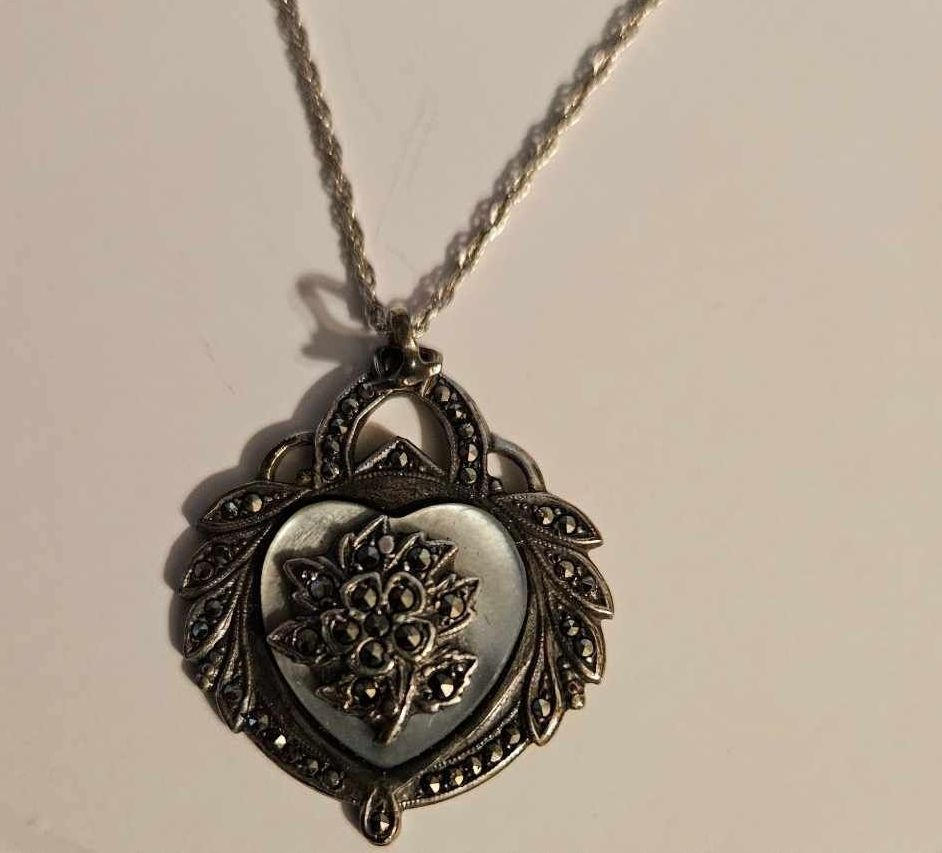
But there was one mystery to solve, known only to me as, “The Missing Heart.” I would have found the answer if I had known to ask the right people. Why did the loss of this small charm occur to me again? Oh, yes, I remember! My niece, Sharon, was going through her mother’s (my sister’s) jewelry and came upon a bracelet she didn’t recognize, and neither did I.
I asked if among her things, had she come upon a small silver and marcasite heart with a mother of pearl inset? At first, I couldn’t remember the stones, so it was hard to describe. Her first answer was, “No”, she said, but she would keep an eye out for it.
I looked online to see if I could at least find something similar to help her identify it. Why did I even care, you might ask. Because, as a small child, like all curious children will, I loved to look in my mother’s jewelry boxes and in her top drawer to see her linen hankies and soft gloves of silk, cotton and leather, small veils of soft netting, hat pins, hair barretts and other small pieces and mementos.
On top of her dresser, among the crystal bowls, was her hair brush, a handheld mirror, and containers of face and body powder and fancy glass bottles of perfume and fragrant lotions.
There, also sat my favorite music box. It was a small wooden piano with just enough room to hold a few small pieces of jewelry.
The music box
Mom’s dresser was always dusty with the powders she used liberally. Her favorite perfume was Tweed. The fragrance is strong, with the tiniest bit of floral notes to keep it feminine, but mostly, it is dark, moody and earthy, woody, and resinous. Perfect for Mom, but not for a small child or even a teenager. I was never tempted to use it, but it smelled spectacular on my loving yet stoic mother.
But, back to the heart.
I sent my nephews and neices online images of similar items. Sharon said she would continue to look. She said she would also ask the other girls. My sister had three girls and four boys that she left behind way too early. She also said that there was a story that went with that heart, if the one I was looking for was one that she remembered. I didn’t remember any such story.
Not long after, another of Kristi’s three daughters, Shauna, sent a message with a photo of the heart. “Is this the one you’ve been looking for, Auntie?” she wrote. I couldn’t believe my eyes.
There it was! She explained that her mother had given it to her, before she passed away, to wear at her wedding. Sarah, one of the three daughters, now had it to wear at her upcoming wedding.
She went on to explain the story behind the heart, a story I had never heard: It was a gift from Mom’s first love. If that’s true, why hadn’t I heard it?
I should have been happy just to know that it was still in the family… but. I wasn’t. I was hurt, confused, and frustrated. When did Mom give that to Kristi? Not known to lie nor even to be secretive, could Kristi and Mom have kept this gift giving a secret? When did this even take place?
I couldn’t be upset with the girls, and of what use is it now for me to be angry with Mom and Kristi, now that they passed on years ago. I decided to sit with the feeling. I couldn’t shake it anyway.
Now, after a couple of weeks, I guess I’m happy that the heart is in safe and loving hands. Somethings I’ll never know, like when or why Mom decided to give the heart to Kristi. We were and are a close and loving family. I know also that Mom and Kristi hadn’t between them, an ounce of secretive intent.
Each of the girls wore the necklace at their wedding, and if I had it, it would have been enjoyed and cherished by only me.
“I beg you to have patience with everything unresolved in your heart and to try to love the questions themselves as if they were locked rooms or books written in a very foreign language. Don’t search for the answers, which could not be given to you now, because you would not be able to live them. And the point is to live everything. Live the questions now. Perhaps then, someday far in the future, you will gradually, without even noticing it, live your way into the answer.”
–Rainer Maria Rilke, Letters to a Young Poet (1929)