What are your thoughts on the concept of living a very long life?
Unless you’re physically and mentally in good health, it is my opinion that one should, as well as might be accomplished, pass on gratefully and peacefully.
When I say, ” in good health”, both physically and mentally, I am aware that good health is relative to each individual. I intimately know what it means to me. I have been nigh unto death twice in my life.
As for me, I do not want to live disabled, physically confined to a wheelchair nor in a bed nor in a nursing home staring at the walls. Nor would I want to live with dementia. My grandmother had dementia, and it was torturous, more so for her, but also for those of us who loved her dearly.
As my mom used to say when she was dying on hospice, I do not want my heart to keep on beating when my mind ceases to function. I am in complete agreement with that sentiment.
Many members of my family have lived very long lives, some even passed one hundred years. When I was younger, I thought I wanted to follow in their footsteps. I no longer have that wish.
Now that I’m nearing 80, I know what pain is. I know what it is have your organs begin to fail. I know what it is to feel myself getting weaker, though I work on my physical body constantly.
I know what it is to be disrespected by those that are younger. I know what it is to be disregarded, though I am educated and my intellect is still intact. I make an effort to learn new things every day.
But in spite of all of that, I love my life. I enjoy my memories. I love each season in turn. I have had an adventurous life. I have been loved good and bad. As I like to say, “I have been ridden hard and put away wet”. And I have no regrets. I can say with a keen certainty that I fear life more than death.
For now, I will live my life just as I wish… anyway, as well as my diminutive finances will let me. I am satisfied with what I have. But I don’t wish to live without my health and an ability to keep a roof over my head and food in my belly.
When I was younger, and my life was full of new experiences, I often said, “Leave when you have to; stay as long as you can”. I realize now that wasn’t always the best advice. But it sure made for an interesting life.
Family Beach Trip: From left, back row: Dad, Mom (Kristi in Mom’s arms) Grandma, Grandpa; Front row: Steve, Me
When I was a young girl, my grandma was everything to me. She was Dad’s mom. I never knew Mom’s mother because she passed away before Mom even had a chance to grow up.
Even though she lived just around the block, I had to go and stay with her as often as I was allowed, and I was always allowed because my parents knew the special things that Grandma and I had together.
I think Kristi and Steve were too busy to spend much time at Grandma’s house unless it was a family affair. Grandma used to say that Kristi wanted to spend the night but once it started to get dark, she wanted to go home.
Sometimes we just sat on the front porch steps and watched the world go by or at night we looked up at the stars until I was too tired to stay awake any longer. On either side of the porch were large Mollis Azaleas, one a dusky yellow and the other a coral orange. The sloped grassy yard was green and weedless, because Grandma pulled up dandelions on her hands and knees, never having to use weed killers. Grandma never asked me to pull weeds with her, but I wanted to because I wanted to be near her and I wanted to do everything that she did.
When I was old enough, I could count on getting to go to Ralph’s grocery store by myself. It was just about a block and a half away but it always felt like an adventure. The store was small but held everything a person could want. Ralph was the owner but also a butcher. I remember well the glass-fronted coolers filled with fresh and luscious-looking meats and the smell of house cleaning products on the other side of the store. One could buy laundry detergent and that night’s dinner at Ralph’s.
Ralph knew all of the neighborhood families. As children, we could always ask for beer or cigarettes to take home. Those were the days when kids, I think, were more trustworthy. Grandma occasionally smoked a cigarette. Nobody wanted her to smoke and she never smoked in front of anyone, but she would ask me to bring a certain brand of cigarette to her sometimes. I don’t think I cared. I think I was fascinated by this sweet gentle white-haired woman in a dress or housecoat, smoking a cigarette.
Grandma didn’t can or make fresh cookies but she always had canned applesauce and pork and beans in the metal. cupboard by the sink. In the top drawer of that cupboard, she had store-bought waffle cookies or oatmeal cookies. Grandma was a really good cook as Thanksgiving dinner attested, but dinner at Grandma’s regularly for me was hot dogs and pork and beans and applesauce.
Company dinners might include potato salad, crab or shrimp louis’, fried chicken, and fresh baked dinner rolls. Sometimes chili, navy beans and hamhocks, meatloaf and mashed potatoes and gravy. and the like.
Grandma made a special dessert that, as far as I was concerned, she didn’t bake often enough. She made a cinnamon roll dough, rolled up apples and sugar and cinnamon on the inside. Then she made a sweet syrup that she poured over the top and put it in the oven to bake until it was sticky and delectable. She served it in shallow bowls and poured sweet cream on top.
Summertime meant watermelon. And I mean watermelon. Not those weak, sickly small watermelons that you find outside of the supermarkets in bins touting proudly, “seedless”. They actually should always write on the sign, “seedless and tasteless”. No, these were watermelon, the size of a small child full of plump black seeds. These were so sweet and full of water that on the hottest days they would quench your thirst. Grandma and I could almost eat a whole one of an afternoon, spitting the seeds into the freshly turned dirt in hopes of growing a watermelon.
Grandma grew up in Kentucky on a plantation. Ohh, the stories that she would tell. She said that in the summertime they’d carry a knife and any watermelon growing out from underneath a fence on the side of the road was fair game. So she knew how to pick a watermelon. I don’t remember her ever saying, “oh, this one is mealie, or this one is dry or this one is tasteless.” Every watermelon that she picked was perfect.
In the late afternoon or in the evening, Grandma would sit on one end of the couch, and I would lie on the other with my feet in her lap. Lying there on the couch, Grandma would peel oranges… as many as I wanted, even five in a row. We’d watch TV, especially the Lawrence Welk show every Saturday, or was it every Sunday? I don’t remember but we never missed it. Grandma would always say, about every man on television that he was a good Christian.
When Grandpa was still alive, they used to watch Billy Graham and Oral Roberts and pray for my arm to get better. Since I had polio, when I was only five years old, the deltoid in my right arm never recovered. When one of the two of those preachers came on the TV, Grandpa would have me sit on the floor between his feet and he would lay hands on my shoulder and pray with the preachers for me to be healed. It didn’t work, but they never gave up, always true believers.
Before Grandpa died, he was a cooper. Like a lot of men who worked with wood and saws that had no safety features, he was missing most or part of every finger. Grandma packed him a lunch every day. I don’t know how he knew that us kids would be at his house when he got home from work, but it never failed that he left us something in that metal lunch box every time. He was a loving family man, a hunter and a fisherman who had black labs. But that’s a different story.
Grandma had a high four poster bed in her small bedroom. Her sheets and pillowcases were always crisp from hanging on the line outside in the summer or on the line strung up in the basement with the large oil furnace for heat. We’d talk until I fell asleep. I never kept a secret from Grandma and as I began to drift off if I heard a siren, my first thought was that my Mom and Dad and Kristi and Steve and Gypsy were safe at home. That was ever my only worry because I felt safe with Grandma.
On top of the high boy dresser was a photograph of Dad in his army uniform when he was only 18, drafted into the army to fight in World War II. I can only imagine Grandma praying and crying while Dad was overseas in the Philippines.
On another dresser was a brush and a handheld mirror and Grandma’s favorite creme perfume, Avon’s Roses Roses. Inside the top drawer was the forbidden Pond’s Cold Cream. When I was young, I had very sensitive skin and if the cold cream even came near me, I would break out in a rash. But after a bath in the big claw foot bathtub, I would go into the bedroom and slather on Pond’s Cold Cream all over my face. I wanted to look and smell just like Grandma. When I went home or if Mom came to pick me up, and my face was red and swollen, she would scold Grandma for letting me use her lotions. But Grandma was innocent, she could deny me nothing.
As I grew up, when Grandma took a bath, I’d wash her soft white back that bent to help any person in need. She worked as a nurse’s aid in the nursery at St. Vincent’s Hospital, taking care of the little newborn babies. She loved and cared for the family. She cared for her neighbors. When Grandpa had a stroke, she took care of him. Though, I always thought of Grandma as strong yet tender, I mostly thought of her as an angel.
One of my favorite times at grandma’s houses, was when her sisters came over for coffee. They sat in the kitchen nook around the formica table, chatting, eating cookies and drinking coffee from Grandma’s special cups. She had Fiesta Ware and some other set that had a plaid motif. My favorite color in the Fiesta Ware, was indigo blue. But my coffee was more milk and sugar than coffee. As I sat and listened to them talk, i understood nothing but I felt like I was one of the grown-ups. Eventually, I’d lose interest or run out of coffee and go outside to play in the summer or onto the couch to read in the winter.
I loved sitting in the nook. Above the windows over the built in bench, hung the crab shaped plates that Grandma took down when she made her crab and shrimp louis’. And in Grandpa’s sweet and thoughtful ways, he built a long, narrow window with glass shelves, along side the back door where grandma kept knick knacks that shone in the sun.
Grandpa had transformed the back porch into that kitchen nook, and created a bedroom in the back of the house. As I grew older and bigger, I sometimes slept in the back room. Grandpa had built a niche in the wall and it was filled with paperback books, written by authors like Zane Gray, and other Western authors, there were also, National Geographics, and condensed versions of the Reader’s Digest.
In that long “Back Bedroom”, as we called it, was where Dad and Auntie Wilma had their bedrooms. At either end were matching single beds with a lamp over the head of the bed for reading. I remember only one dresser, but there must have been two and there was not a closet. This is where they grew up in this small but loving house.
Growing up, Thanksgivings were always at Grandma and Grandpa’s house. There was no dining room as such, but the large dining table was open to its full length at the end of the living room to accommodate us all. The front door had Grandpa’s unique signature. He had inserted a ship’s porthole in the heavy wooden door in contrast to the beautiful leaded windows in the rest of the room.
One accessed the basement from outside the house and down narrow cement stairs that led down to the dark unfinished basement that held the enormous oil furnace with octopus-type arms rising to meet the vents in the floor above it. When the furnace fired up, you could hear it ignite and the large fan blowing hot air up into the house. It was a comforting sound. Grandma’s favorite setting on the thermostat was 80°. That was just perfect for the two of us. I still like to have a very warm house in the winter.
I can recall the smell of the dirt floors in the basement and the oil tank and the dampness. I remember the cobwebs with spiders and the yellow boxes of “Slug Be Gone” with pictures of slugs on the front and warnings on the back. And the long tubular boxes of rose fertilizer. To Grandma, her flowers were precious, as was the large Dutch Elm tree that shadowed one side of her yard.
Years after I was grown, the tree got the dreaded Dutch Elm disease and it failed and had to be removed. To me Grandma’s backyard was never the same. The yard’s salvation was the large Mountain Ash, which fed the birds it’s brilliant red berries. When Grandpa built the bedroom and the nook on the back of the house, he and Grandma planted beautiful hydrangea bushes that grew to almost the roof line. There in the north facing shade of the house, the hydrangeas thrived in wet dirt that always had a bit of green moss growing. When those were removed to accommodate a cement, patio, it broke Grandma’s heart.
When Grandma and I would wake in the morning, we would sit at the table in the nook and watch the birds in the bird bath. I think this was Grandma’s favorite activity. And because Grandma loved it so, it became my favorite activity, as well. It still is. When we were at grandma’s house, her backyard. was our playground.
All summer long, we played in the sprinkler, running in the soft thick green grass. There were bouncy metal chairs and a wooden lounge with a thick heavy rust colored cushion and a large wooden picnic table.
There was always in abundance, applesauce and hot dogs that we could eat anytime we wanted, and cans of Pork and Beans and packaged oatmeal cookies, or the kind that were like rectangular crunchy waffles and cream frosting layered in between. If any of the family stopped by for just a minute or two, she insisted on one taking a paper bag with a package of hot dogs and cans of pork and beans and applesauce. She couldn’t stand the thought of any of us being hungry.
In my heart and mind there was never anyone better than Grandma.
I was going to save this for a different blog post, but I’ll just mention it here. Grandma and I mourned the tragic death of my dad, her son together. Dad died in a car accident at the young age of 51. For the rest of her life, grandma never quit saying that children should never die before their parents. For months I never stopped chanting “no”. I was 9 months pregnant. Our entire family was devastated. We were profoundly changed by this event. Perhaps Grandma more than anyone. But in many ways she was my solace.
One day Grandma died. Some boys accosted her, knocking her down on the street as she walked to the store. They stole her purse. She was never the same after this. It wasn’t the fall. It wasn’t about the money. But paranoia set in. It was her identification. They knew where she lived. Now, most often her blinds were closed. Her doors that were always open were locked. She stopped walking to the store alone. Eventually dementia set in.
Auntie Wilma and mom alternated staying with her, so she was able to stay in her home until she passed away. Eventually, she thought she was being kept against her will at the neighbor’s house. She worried constantly that she needed to be home to fix meals for her family.
I won’t say that this was easy for me. The last time I saw her alive, she was sitting in her chair in the living room. She wanted some assistance to get up. I walked over to her, reached out taking her arm and her hand and gently tried to help. Suddenly, she yelped like an injured animal and cried out, “I never thought you would hurt me and now you’ve broken my arm”. Of course, she was not injured in any way, but this hurt more then I could ever have imagined. To this day, I feel those words as though it happened yesterday. Of course, I know that this was the dementia talking, but between grandma and I, there had never been a crossword spoken between us.
I never saw her again after that day. I couldn’t bear to see my dear grandma crying. I have the memories. I think sometimes I can smell her Avon Roses, Roses, cream perfume and Ponds cold cream. I sometimes think I can feel her soft hands and hear her gentle voice. I wish I could sit in her garden again. I wish I could feel her strong arms around me once again. And I wish I could wash her back once more.
Surprisingly, my summer project is a heavy-duty wool cardigan by Caitlin Hunter, of Boyland Knits, aptly named “Gloam”. In the gloaming means the twilight hours just after sunset. “In the gloaming” has always been my favorite time of day, whether it be a summer, winter, spring, or fall evening.
There was a time in my life, I would say, probably the decades between 20 and 60 years when I felt unquenchable yearning at this time of day, for what I do not know. I couldn’t tell if I had to go out of the house or if I needed to stay in. There was a restlessness about it… as if I was missing out on something. I sometimes would at least need to be out on the porch as darkness overcame the gloaming.
Thank goodness I don’t feel the same about the gloaming anymore. But still, this is my favorite time of day heavy with nostalgia and longing and memories of days gone by. So when I found the sweater named the “Gloam” it just seemed right that I would knit it. The style was right, as well.
The garment has an Asian appearance to it like a kimono, with an open front and wide medium-length sleeves, and a cropped body. The yarn I’m using is of DK weight of Highland woolen spun of New England, Harrisville, in a deep charcoal colorway. Across the front and back is a large textured section of 72 rows.
Some would not consider this summer knitting, and neither do I but it is what it is. I’m having a lovely time working on it but it’s not something I take outside with me. That’s okay, because as I’ve grown older, sitting outside in the heat is not one of my pleasures. As August approaches, I might have to switch to sock or hat knitting, but I’d love to have this sweater to wrap up in come Fall.
Maybe I’ll need to take it outside to work on in the gloaming as the heat of the day subsides.
My cousin Gail, after reading my blog post, brought up that the word “gloaming” reminded her of my mom. Now I might understand why I loved it so:
Mom played the piano and sang a lot as we were growing up. We had sheet music in the piano bench and Mom would sing and play all kinds of music, from pop, ballads, jazz, blues, and more. Now I know why that word stirs up such emotion in me. I now remember that Mom sang, “In the Gloamingʻ.
Thank you Gail for stirring my memory. Follow the link below to hear this beautiful but sad song.
So it’s hot today in Portland. The temperature is in the 90s. The beach sounds like a good place to be… with a beach bottle.
We’re just not used to this kind of weather, at least not until late August when we might get hit with a heat wave. So, I’m in reverie in front of the air conditioner.
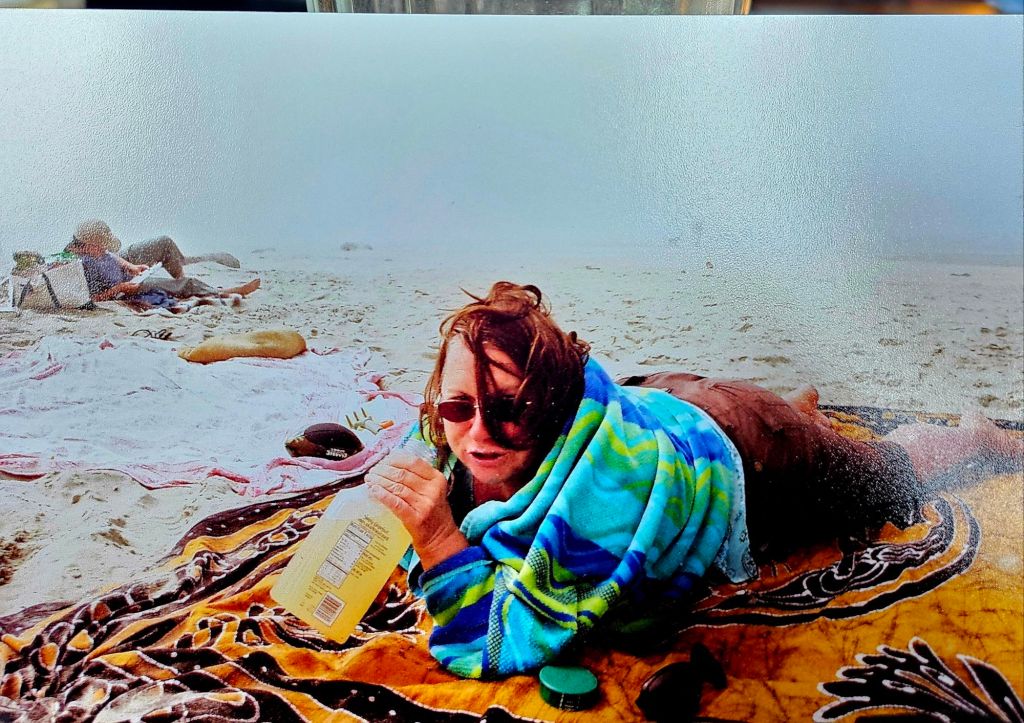
Me with a beach bottle
When I was living in Santa Monica, I could walk a few blocks to the beach. When special company came for a visit, I would make what I called a “beach bottle”.
How did I make it? Pay attention, Judith.
Squeeze fresh lemon juice into a bottle, from a just-picked lemon, off the tree in the backyard. Add water and sugar to taste. Here comes the good part:
Add whatever might be your pleasure at the time. Rum? Vodka? Gin? With a splash of Drambuie, Cointreau, Lemoncello, or whiskey for a taste of Kentucky.
Here’s a photo of me enjoying one when Hannah and al-Gene came for a visit. Santa Monica was paradise.
We had a small forested area that ran along the railroad tracks at the end of our street, maybe 3 blocks to the East. The “Cut” we called it.
Trains went (cut) through our neighborhood to cross the train bridge over the Willamette River to the Union Pacific railroad station on the West side.
At night, we could hear the trains chugging by and blowing their whistles. Chug, chug, whoo hoo. It was a mysterious and forelorn sound to me.
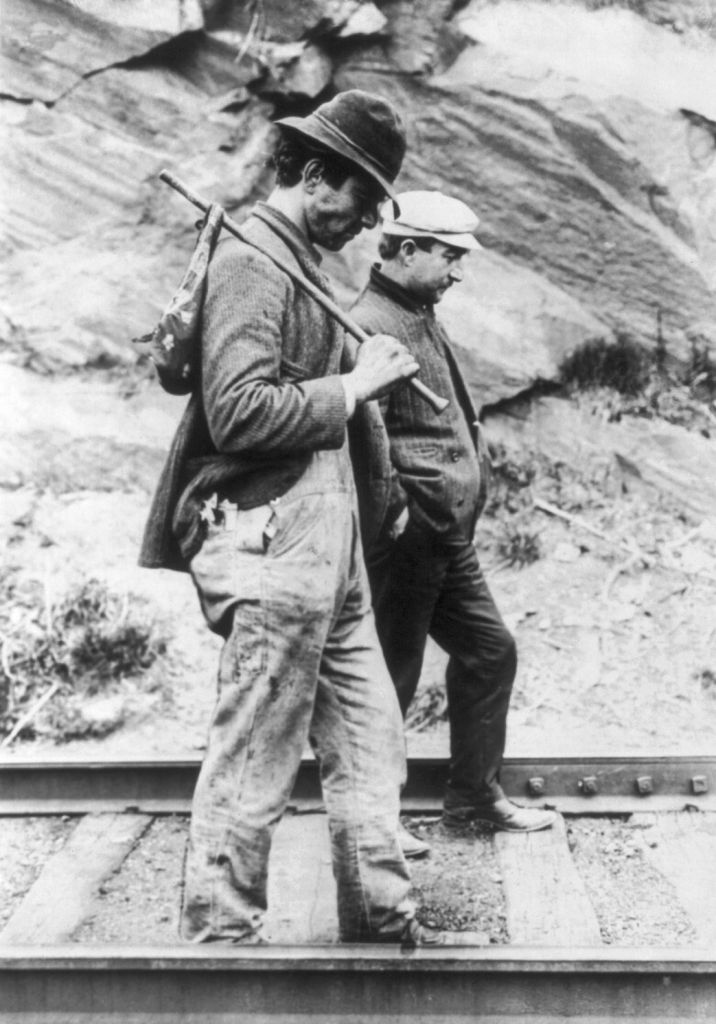
Hobos jumped the train as it slowed to cross the narrow bridge. All the boys were allowed to play in the Cut but were instructed to head for home when the train passed, leaving a group of hobos.
It was a pleasant place to camp out, treed with wild grasses sofening the hard ground. They were out of sight because the tracks were cut deep into the terrain, but we all knew that this was ẃhere the hobos jumped off.
They started camp fires to warm mostly cans of beans. My brother told me this because, being a girl, I wasn’t allowed in the Cut. I was too afraid of those worn and tattered fellows, anyway. Dad, who worked for the railroad, always said they were just men who were down on their luck.
My brother and the neighbirhood boys went down into the Cut as soon as the hobos hopped the next train. They were probably secretly dreaming about one day hopping a train outta there.
They were sure they’d find treasure in the cold ashes around the camp. Something, anything. But mostly, they found cigarette butts and tin cans.
The boys played hobos, tying a kitchen towel or big red or blue handkerchiefs around the end of a long stick fllling it with cans of beans and peanut butter sandwiches pretending to run away from home. They slung that hobo sack over their shoulder, walking down the street as if they were really leaving.
The hobos never caused a bit of trouble, unlike the “hoods.” The hoods were a group of teenage ruffians from school. They drank, smoked and harassed us girls, and fought with each other in small gangs. They never did much damage to the neighborhood or to each other. They were just tough acting.
They stormed around the neighborhood in souped-up cars, wearing tight t-shirts and narrow leather belts on their Levis. To our parent’s chagrin, we fell in love with the bad boys.
That’s who our parents should have warned us about, not the hobos.
How many of us girls got knocked up by hobos? None.
I talked to Jack for a long time today. What I love about still being able to be close to him is that our memories are the same and that we share those memories.
My dad, in jest, used to call himself “dirty dog Anderson,” and my brother Steve, when he was in high school, called himself, “Beatleman”. If you saw how he dressed, you would know why.
There’s no one else on earth that would know those things. We have laughed about them now for 60 years. I don’t know if you can possibly know how precious this is to me. If Jack and I were completely estranged, which for a while, I thought we would always be, we wouldn’t be able to share these memories.
My family loved our dog Gypsy so much that when we would see home movies of her, the entire family would be in tears. I found Gypsy, a small, tan, beagle type dog lost in front of our house. Jack and I share this memory. His memory is so sharp that he remembers things in such clear detail that he can fill in areas that I no longer can remember.
He remembered today, exactly the little secondhand shop where he bought me an authentic Navajo ring of carved silver set with a deeply orange/red carnelian stone. I’ve been remembering how much of myself was formed as a young girl from 16 through our entire relationship because of things that Jack said and did. I remember the things that he bought me. He encouraged me to learn and to stay curious.
He bought me art supplies and paid for art classes. He introduced me to music and artists, and literature that I may not have run into on my own so early in life.
He bought me clothes and artwork of all kinds and taught me the value of handmade everything. We shared foreign films on days when we didn’t feel like going to school. Instead, we would spend time in the art museum, in galleries, in cinema houses and the library. We lived in houses with character and historical value. I could go on and on, but I don’t know where we went off the rails.
But off the rails, we did go… some 30 years after we started. We used terrible words with each other, though we knew so many beautiful words. We hurt one another, and yet we held it together for so many years. I’m not sure that we could have salvaged our relationship. I don’t think I could stand it if I thought we could have saved it. It’s easier and less painful for me to think that our parting was necessary for our growth. Just as a plant needs pruning to continue to grow and produce flowers and fruits and vegetables. Sometimes, those plants need to move away from one another and give each more room to grow.
Regardless, I treasure the times now when we do talk, and when we remember. It’s good to know people who have known you through the journey.
And now, as far as my immediate family, there’s just Steve who knew me back when. Maybe it’s our ages, but with these two, Jack and Steve, my life has contiguous meaning.
I was knitting a super lovely sock named “Sheperdess” designed by one half of the podcasters “Grocery Girls,” Tracie Millar.
I was knitting them in Schachenmayer, merino yak, 4 ply, in colorway: 07516. I envision that color as spring green turned fall green for lack of light.
This is an easy and well written pattern. I loved the yarn and the color. It’s so perfect for dark November days and nights.
In the first photo, there lies a book containing a collection of essays titled “Vodou,” written by my mentor Dr. Donald Cosentino, a world expert on Haitian vodou. And there lay the socks sprinkled with my beloved candy corn.
In the 2nd photo is a yule card by a Swedish artist, who’s name escapes me, old photos of my grandma and grandpa, Eduardo Galeano’s book, “Memory of Fire”, Alice Staremore’s book, “Glamourie” and a notebook of my writings. And there are the beautiful socks in progress
I love an assemblage photograph.
Knitting calms me in the midst of the chaos that is our world… our reality. I hope that handcrafting does that for you, too.
PS: This was written maybe three or four years ago, but it’s still pertinent for today.
This is the beautiful cable hat from the yarn that my friend Judith brought me from ireland. It took such a short time to make. I’m already wearing it. I think it is my favorite hat so far. And I love it especially today because our temperatures dropped below freezing for the first time this fall.
I won’t go into detail about it since i’ve already written a post with all the details.. Cozy things are important on days like this. Thanksgiving is over, and now to wait anxiously for Christmas and to enjoy all of these cold days that are ahead of us.
The fruit cake was made yesterday while we enjoyed leftovers and a fresh charcuterie board. For those of you who suffer from lactose intolerance, did you know that if you eat deeply aged cheese, that it won’t bother your stomach? Anyway, happily, it doesn’t bother mine.
What is Christmas without the wonderful fruity dense cake that i’ve been making for decades now. The fruit was soaked for over a week in rum. Now it’s wrapped in cheese cloth soaked in rum and wrapped in foil to wait for another month..
I’m hoping the christmas tree comes today. There are just a few things that I enjoy more or as well as a christmas tree. I’ll spend the rest of today knitting on the pair of socks that I started before I cast on the irish hat.
I wish and I hope, which doesn’t come easily to me, that there is joy and, most of all, peace in this holiday season for you and yours, while we remember that many suffer. And so it has always been.
When weed came in kilos across the border from Mexico, it was simple. That’s when a kilo was $35-$60. When you most likely bought a lid in a plastic sandwich baggy for $10 from a friend.
When what you bought was smattered with stems and seeds that would pop and burn holes in your clothes or in your davenport or the seat of the car.
When a part of opening the baggy, and before smoking, was performing the ritual of carefully picking through and cleaning out the debris.
When Zig Zag papers were bought at the corner store to roll a joint. When one took pride in knowing how to roll a perfect joint or a giant “doobie,” It was an acquired skill.
We rolled joints by hand that wouldn’t fall apart, clear to the finger burning end. Or maybe someone had a pipe and sometimes a hooka.
When we all had “roach clips”. Making a nice “roach clip,” was a work of art and creativity. Does anyone even know what a roach clip is or use one anymore?
The very last bit of a joint, or roach, was savored by slipping it into a clip and holding it to your lips so as not to burn your fingers. How very handy they were.
PS: Those treasured relics pictured above are more than 50 years old, probably closer to 60. They were made from the bristles of the street cleaners brushes that one could find in the gutters while walking the streets of Portland.




 eyeamdust