I used to Wash My Grandma’s back

Family Beach Trip: From left, back row: Dad, Mom (Kristi in Mom’s arms) Grandma, Grandpa; Front row: Steve, Me

When I was a young girl, my grandma was everything to me. She was Dad’s mom.  I never knew Mom’s mother because she passed away before Mom even had a chance to grow up.

Even though she lived just around the block, I had to go and stay with her as often as I was allowed, and I was always allowed because my parents knew the special things that Grandma and I had together.

I think Kristi and Steve were too busy to spend much time at Grandma’s house unless it was a family affair. Grandma used to say that Kristi wanted to spend the night but once it started to get dark, she wanted to go home.

Sometimes we just sat on the front porch steps and watched the world go by or at night we looked up at the stars until I was too tired to stay awake any longer. On either side of the porch were large Mollis Azaleas, one a dusky yellow and the other a coral orange. The sloped grassy yard was green and weedless, because Grandma pulled up dandelions on her hands and knees, never having to use weed killers. Grandma never asked me to pull weeds with her, but I wanted to because I wanted to be near her and I wanted to do everything that she did.

When I was old enough, I could count on getting to go to Ralph’s grocery store by myself. It was just about a block and a half away but it always felt like an adventure. The store was small but held everything a person could want. Ralph was the owner but also a butcher. I remember well the glass-fronted coolers filled with fresh and luscious-looking meats and the smell of house cleaning products on the other side of the store. One could buy laundry detergent and that night’s dinner at Ralph’s.

Ralph knew all of the neighborhood families. As children, we could always ask for beer or cigarettes to take home. Those were the days when kids, I think, were more trustworthy. Grandma occasionally smoked a cigarette. Nobody wanted her to smoke and she never smoked in front of anyone, but she would ask me to bring a certain brand of cigarette to her sometimes. I don’t think I cared. I think I was fascinated by this sweet gentle white-haired woman in a dress or housecoat, smoking a cigarette.

Grandma didn’t can or make fresh cookies but she always had canned applesauce and pork and beans in the metal. cupboard by the sink. In the top drawer of that cupboard, she had store-bought waffle cookies or oatmeal cookies. Grandma was a really good cook as Thanksgiving dinner attested, but dinner at Grandma’s regularly for me was hot dogs and pork and beans and applesauce.

Company dinners might include potato salad, crab or shrimp louis’, fried chicken, and fresh baked dinner rolls. Sometimes chili, navy beans and hamhocks, meatloaf and mashed potatoes and gravy. and the like.

Grandma made a special dessert that, as far as I was concerned, she didn’t bake often enough. She made a cinnamon roll dough, rolled up apples and sugar and cinnamon on the inside. Then she made a sweet syrup that she poured over the top and put it in the oven to bake until it was sticky and delectable. She served it in shallow bowls and poured sweet cream on top.

Summertime meant watermelon. And I mean watermelon. Not those weak, sickly small watermelons that you find outside of the supermarkets in bins touting proudly, “seedless”. They actually should always write on the sign, “seedless and tasteless”. No, these were watermelon, the size of a small child full of plump black seeds. These were so sweet and full of water that on the hottest days they would quench your thirst. Grandma and I could almost eat a whole one of an afternoon, spitting the seeds into the freshly turned dirt in hopes of growing a watermelon.

Grandma grew up in Kentucky on a plantation. Ohh, the stories that she would tell. She said that in the summertime they’d carry a knife and any watermelon growing out from underneath a fence on the side of the road was fair game. So she knew how to pick a watermelon. I don’t remember her ever saying, “oh, this one is mealie, or this one is dry or this one is tasteless.” Every watermelon that she picked was perfect.

In the late afternoon or in the evening, Grandma would sit on one end of the couch, and I would lie on the other with my feet in her lap. Lying there on the couch, Grandma would peel oranges… as many as I wanted, even five in a row. We’d watch TV, especially the Lawrence Welk show every Saturday, or was it every Sunday?  I don’t remember but we never missed it. Grandma would always say, about every man on television that he was a good Christian.

When Grandpa was still alive, they used to watch Billy Graham and Oral Roberts and pray for my arm to get better. Since I had polio, when I was only five years old, the deltoid in my right arm never recovered. When one of the two of those preachers came on the TV, Grandpa would have me sit on the floor between his feet and he would lay hands on my shoulder and pray with the preachers for me to be healed. It didn’t work, but they never gave up, always true believers.

Before Grandpa died, he was a cooper. Like a lot of men who worked with wood and saws that had no safety features, he was missing most or part of every finger. Grandma packed him a lunch every day. I don’t know how he knew that us kids would be at his house when he got home from work, but it never failed that he left us something in that metal lunch box every time. He was a loving family man, a hunter and a fisherman who had black labs. But that’s a different story.

Grandma had a high four poster bed in her small bedroom. Her sheets and pillowcases were always crisp from hanging on the line outside in the summer or on the line strung up in the basement with the large oil furnace for heat. We’d talk until I fell asleep. I never kept a secret from Grandma and as I began to drift off if I heard a siren, my first thought was that my Mom and Dad and Kristi and Steve and Gypsy were safe at home. That was ever my only worry because I felt safe with Grandma.

On top of the high boy dresser was a photograph of Dad in his army uniform when he was only 18, drafted into the army to fight in World War II. I can only imagine Grandma praying and crying while Dad was overseas in the Philippines.

On another dresser was a brush and a handheld mirror and Grandma’s favorite creme perfume, Avon’s Roses Roses. Inside the top drawer was the forbidden Pond’s Cold Cream. When I was young, I had very sensitive skin and if the cold cream even came near me, I would break out in a rash. But after a bath in the big claw foot bathtub, I would go into the bedroom and slather on Pond’s Cold Cream all over my face. I wanted to look and smell just like Grandma. When I went home or if Mom came  to pick me up, and my face was red and swollen, she would scold Grandma for letting me use her lotions. But Grandma was innocent, she could deny me nothing.

As I grew up, when Grandma took a bath, I’d wash her soft white back that bent to help any person in need. She worked as a nurse’s aid in the nursery at St. Vincent’s Hospital, taking care of the little newborn babies. She loved and cared for the family. She cared for her neighbors. When Grandpa had a stroke, she took care of him. Though, I always thought of Grandma as strong yet tender, I mostly thought of her as an angel.

One of my favorite times at grandma’s houses, was when her sisters came over for coffee. They sat in the kitchen nook around the formica table, chatting, eating cookies and drinking coffee from Grandma’s special cups. She had Fiesta Ware and some other set that had a plaid motif. My favorite color in the Fiesta Ware, was indigo blue. But my coffee was more milk and sugar than coffee. As I sat and listened to them talk, i understood nothing but I felt like I was one of the grown-ups. Eventually, I’d lose interest or run out of coffee and go outside to play in the summer or onto the couch to read in the winter.

I loved sitting in the nook. Above the windows over the built in bench, hung the crab shaped plates that Grandma took down when she made her crab and shrimp louis’. And in Grandpa’s sweet and thoughtful ways, he built a long, narrow window with glass shelves, along side the back door where grandma kept knick knacks that shone in the sun.

Grandpa had transformed the back porch into that kitchen nook, and created a bedroom in the back of the house. As I grew older and bigger, I sometimes slept in the back room. Grandpa had built a niche in the wall and it was filled with paperback books, written by authors like Zane Gray, and other Western authors, there were also, National Geographics, and condensed versions of the Reader’s Digest.

In that long “Back Bedroom”, as we called it, was where Dad and Auntie Wilma had their bedrooms. At either end were matching single beds with a lamp over the head of the bed for reading. I remember only one dresser, but there must have been two and there was not a closet. This is where they grew up in this small but loving house.

Growing up, Thanksgivings were always at Grandma and Grandpa’s house. There was no dining room as such, but the large dining table was open to its full length at the end of the living room to accommodate us all. The front door had Grandpa’s unique signature. He had inserted a ship’s porthole in the heavy wooden door in contrast to the beautiful leaded windows in the rest of the room.

One accessed the basement from outside the house and down narrow cement stairs that led down to the dark unfinished basement that held the enormous oil furnace with octopus-type arms rising to meet the vents in the floor above it. When the furnace fired up, you could hear it ignite and the large fan blowing hot air up into the house. It was a comforting sound. Grandma’s favorite setting on the thermostat was 80°. That was just perfect for the two of us. I still like to have a very warm house in the winter.

I can recall the smell of the dirt floors in the basement and the oil tank and the dampness. I remember the cobwebs with spiders and the yellow boxes of “Slug Be Gone” with pictures of slugs on the front and warnings on the back. And the long tubular boxes of rose fertilizer. To Grandma, her flowers were precious, as was the large Dutch Elm tree that shadowed one side of her yard.

Years after I was grown, the tree got the dreaded Dutch Elm disease and it failed and had to be removed. To me Grandma’s backyard was never the same. The yard’s salvation was the large Mountain Ash, which fed the birds it’s brilliant red berries. When Grandpa built the bedroom and the nook on the back of the house, he and Grandma planted beautiful hydrangea bushes that grew to almost the roof line. There in the north facing shade of the house, the hydrangeas thrived in wet dirt that always had a bit of green moss growing. When those were removed to accommodate a cement, patio, it broke Grandma’s heart.

When Grandma and I would wake in the morning, we would sit at the table in the nook and watch the birds in the bird bath. I think this was Grandma’s favorite activity. And because Grandma loved it so, it became my favorite activity, as well. It still is. When we were at grandma’s house, her backyard. was our playground.

All summer long, we played in the sprinkler, running in the soft thick green grass. There were bouncy metal chairs and a wooden lounge with a thick heavy rust colored cushion and a large wooden picnic table.

There was always in abundance, applesauce and hot dogs that we could eat anytime we wanted, and cans of Pork and Beans and packaged oatmeal cookies, or the kind that were like rectangular crunchy waffles and cream frosting layered in between. If any of the family stopped by for just a minute or two, she insisted on one taking a paper bag with a package of hot dogs and cans of pork and beans and applesauce. She couldn’t stand the thought of any of us being hungry.

In my heart and mind there was never anyone better than Grandma.

I was going to save this for a different blog post, but I’ll just mention it here. Grandma and I mourned the tragic death of my dad, her son together. Dad died in a car accident at the young age of 51. For the rest of her life, grandma never quit saying that children should never die before their parents. For months I never stopped chanting “no”.  I was 9 months pregnant. Our entire family was devastated. We were profoundly changed by this event. Perhaps Grandma more than anyone. But in many ways she was my solace.

One day Grandma died. Some boys accosted her, knocking her down on the street as she walked to the store. They stole her purse. She was never the same after this. It wasn’t the fall. It wasn’t about the money. But paranoia set in. It was her identification. They knew where she lived. Now, most often her blinds were closed. Her doors that were always open were locked. She stopped walking to the store alone. Eventually dementia set in.

Auntie Wilma and mom alternated staying with her, so she was able to stay in her home until she passed away. Eventually, she thought she was being kept against her will at the neighbor’s house. She worried constantly that she needed to be home to fix meals for her family.

I won’t say that this was easy for me. The last time I saw her alive, she was sitting in her chair in the living room. She wanted some assistance to get up. I walked over to her, reached out taking her arm and her hand and gently tried to help. Suddenly, she yelped like an injured animal and cried out, “I never thought you would hurt me and now you’ve broken my arm”. Of course, she was not injured in any way, but this hurt more then I could ever have imagined. To this day, I feel those words as though it happened yesterday. Of course, I know that this was the dementia talking, but between grandma and I, there had never been a crossword spoken between us.

I never saw her again after that day. I couldn’t bear to see my dear grandma crying. I have the memories. I think sometimes I can smell her Avon Roses, Roses, cream perfume and Ponds cold cream. I sometimes think I can feel her soft hands and hear her gentle voice. I wish I could sit in her garden again. I wish I could feel her strong arms around me once again. And I wish I could wash her back once more.
Hobos and the Cut

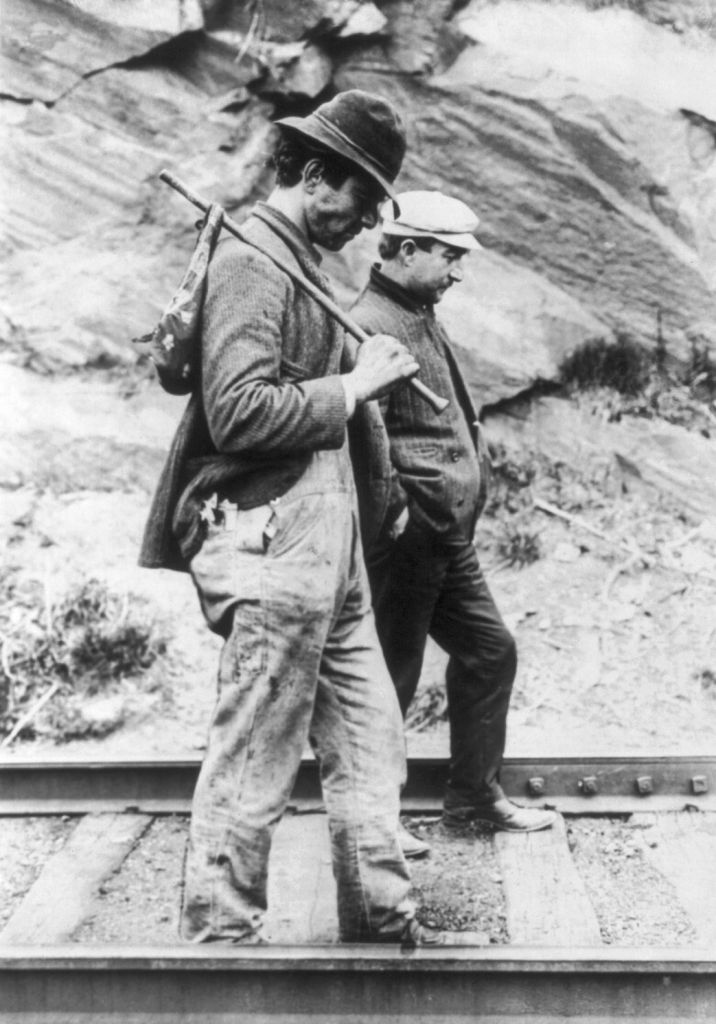
Hobos: Men down on their luck

We had a small forested area that ran along the railroad tracks at the end of our street, maybe 3 blocks to the East. The “Cut” we called it.

Trains went (cut) through our neighborhood to cross the train bridge over the Willamette River to the Union Pacific railroad station on the West side.

At night, we could hear the trains chugging by and blowing their whistles. Chug, chug, whoo hoo. It was a mysterious and forelorn sound to me.

Hobos jumped the train as it slowed to cross the narrow bridge. All the boys were allowed to play in the Cut but were instructed to head for home when the train passed, leaving a group of hobos.

It was a pleasant place to camp out, treed with wild grasses sofening the hard ground. They were out of sight because the tracks were cut deep into the terrain, but we all knew that this was ẃhere the hobos jumped off.

They started camp fires to warm mostly cans of beans. My brother told me this because, being a girl, I wasn’t allowed in the Cut. I was too afraid of those worn and tattered fellows, anyway. Dad, who worked for the railroad, always said they were just men who were down on their luck.

My brother and the neighbirhood boys went down into the Cut as soon as the hobos hopped the next train. They were probably secretly dreaming about one day hopping a train outta there.

They were sure they’d find treasure in the cold ashes around the camp.  Something, anything. But mostly, they found cigarette butts and tin cans.

The boys played hobos, tying a kitchen towel or big red or blue handkerchiefs around the end of a long stick fllling it with cans of beans and peanut butter sandwiches pretending to run away from home. They slung that hobo sack over their shoulder, walking down the street as if they were really leaving.

The hobos never caused a bit of trouble, unlike the “hoods.” The hoods were a group of teenage ruffians from school. They drank, smoked and harassed us girls, and fought with each other in small gangs. They never did much damage to the neighborhood or to each other. They were just tough acting. 

They stormed around the neighborhood in souped-up cars, wearing tight t-shirts and narrow leather belts on their Levis. To our parent’s chagrin, we fell in love with the bad boys.

That’s who our parents should have warned us about, not the hobos.

How many of us girls got knocked up by hobos? None.

How many by the boys? Lots.

Swallowing My Tooth, Go Carts and BB Guns

When I was a kid, we were living in Eugene in Fox Hollow on Spencer’s Butte. We lived nextdoor to the Rice family. Dad and Mom became friends with Ray and Myrna Rice and we kids got close to Cathy, Charlie, Cheryl, Janet and I don’t remember the names of the other kids, but I think there were about 4 or 5 of them.

The oldest kid was a boy and he didn’t care much for us. I remember that I had a great straw hat that I treasured and a solid crush on the boy. One time he put that straw hat over a pile of dog poop and stepped on it. That was the end of my straw hat, though I tried to clean it with a strong stream of water from the hose. Mom made me throw it away. And that was the end of the crush I had on him.

Even though we were only going to be in Eugene for a couple of years while my dad tried to find job satisfaction at Acme Fast Freight, he never got happy and so I remember tensions were high. But we were tight and held together.

Mom went straight to work at Sacred Heart Hospital. Being a nurse who trained at the University of Minnesota, she could get a job in a minute and deep at heart she was a nurse. She loved her job no matter where she lived.

We only stayed in Fox Hollow for the 1st part of those 2 years but boy they were fun times. For one, it was rural and we had moved from St. Johns, which was a small community in the larger city of Portland. We had the run of the place. Just up the road was a roller rink where we went as often as was allowed.

Steve often would put Kristi on his handlebars and they would go up to the road above our house and ride down the mountain as fast as he could peddle. As far as I was concerned they were dare devils and I dare not attempt a ride down the mountain… especially not with Steve. He was ridiculously fearless.

He was in high school, maybe freshman and sophomore years and Kristi was probably in 5th or 6th grade… eleven years old maybe. She was nothing but fun and carelessness. Her hair would fly and her big blue eyes looked wild. She was as fearless as Steven.

Steve was ingenious and loved to invent something out of nothing. He built a “go cart” out of scrap wood and some wagon tires. We didn’t need a motor since the house was at the bottom of a steep descent down from the road. That was our raceway.

We’d push the heavy cart up the driveway, turn it around, hop on and go. I don’t remember much of a steering mechanism. I remember ropes or something attached to what you might call something to steer with, it was more like, lean to the left, lean to the right and hope that once you zoomed through the carport, you wouldn’t crash into the roof supports and you’d try to miss the clothes line pole centered between the support beams. Most of the time we made it.

The house was a long way from the road, so we picked up alot of speed. And brakes? There were none. By the time we came by the house, barely passing through the carport safely, we’d be sailing at top speed. We’d, pass the house, continuing on across the property until we crossed a dirt road and smashed and crashed into a fence on the other side. The fence stopped the go cart so suddenly, your whole body jerked and shuddered to a halt nearly giving us whiplash.

A huge oak tree, perfect for climbing, awaited certain unlucky kids who were not as adept as we were at missing it. But there was something more sinister than the oak tree standing there. The fence was covered in poison ivy.

I remember Steve covered in the poison ivy rash, all red and scabby, with an uncontrollable itch and whitish pink from calamine lotion. Out of us three kids, Steve was the only one who got the dreaded infection. But that vine covered fence didn’t stop us from continuing to ride our go cart down the hill and into the fence.

The old oak tree was my safe haven. I called it the girl’s tree and boys were not allowed to climb it. If they tried to I’d scream at the top of my lungs and kick at them until they left me alone.

During this time, Steve had a beloved bb gun. One afternoon, he reluctantly acquiesced to teach me to shoot it. He held it up, barrel pointing to the sky. He growled at me to not pull the trigger until he said to, threatening me with sudden death if I made a wrong move. I promised I wouldn’t. He dropped some bbs down the barrel and lowered it horizontally with his thumb over the end so they wouldn’t roll out.

For some reason at that moment, without warning, I pulled the trigger embedding the first bb into his thumb. He pulled the gun out of my hand and started yelling and pushed me. I started yelling too, screaming, “Please don’t tell Mom. Please don’t tell Dad.” He never did because they probably would have taken the gun away from him if they knew he was letting me shoot it. That was not the first or the last time that we kept secrets from Mom and Dad.

Well, back to the Rice family. They liked to go camping and fishing as much as we did. What I remember most is that Myrna would make these big fat melt-in -your-mouth cinnamon rolls to take along. Though I loved the swimming and the fishing, the campfires and roasting marshmallows and sleeping in a canvas tent, in canvas and flannel sleeping bags, the cinnamon rolls are what I remember most about camping with the Rice’s.

One summer evening I was over at the Rice’s house. To get there, there was a path between our houses. We went back-and-forth enough that we could walk that path or run that path or cartwheel on that path blindfolded. It was about the distance of two city blocks. It was partially dirt and grass. When it rained the dirt parts had big puddles and mud but in the summer there were just dips and high spots making it all the more fun to ride our bicycles over. There was a boulder near the end closest to our house. The large stone was the size of a hassock for a comfy living room armchair.

When I got to their house, it was almost sunset. They were making homemade taffy. Myrna cooked the taffy and when it was cool enough, the kids pulled and pulled it until it was shiny and smooth. We couldn’t resist eating it at the same time. Once Myrna said we had pulled enough, we cut it with scissors into bite size pieces and wrapped it in wax paper squares and twisted the ends to keep it from sticking together and to keep it fresh.

I was having a wonderful time laughing and talking and getting all sticky. I was popping bits of taffy into my mouth, the candy sticking to my teeth. Suddenly, I realized that a tooth, one of my molars, got stuck in taffy and pulled it right out of my gums and I had swallowed it. Immediately, I began to cry.

I ran from the house into the darkened yard. I should have been able to transverse that path with ease, but no. As I ran my eyes were filled with tears and I was afraid something terrible would happen to me since I had swallowed my tooth.

I was running wildly and at top speed. On any other night, I would have reached home in a minute or two. But when I got to the boulder, my toe hit it and my momentum launched my body over the boulder and into the grass headlong, adding insult to injury.

I was dazed. I was worried. Mom was still too far away. Eventually, I was able to get up and make my way to the house with bloodied knees and bloodied hands. And on top of that I had swallowed a tooth. I couldn’t imagine what would happen now. Would I die?

My mom, who first of all is a nurse and second of all is a stoic and third of all is a loving and caring mother, took me to the bathroom where the cleansing and disinfecting took place. No tiny stone or bits of sand or mud was left in my poor knees and hands and they were soon disinfected with mecurichrome and bandaged. No tears or crying for mercy stopped her from making sure that these injuries would heal properly.

It took a bit for her to understand that I was trying to say that not only did I have bodily injuries but I had swallowed my tooth along with a piece of taffy. I’m sure now that mom hid her smile at how distraught I was. She knew that that tooth would be quickly excreted along with everything else I had eaten.

But Mom being Mom, she held me tightly in her arms and comforted me and explained that I had nothing to worry about. I knew that the best place for me to be was in my mother’s arms. Once she assured me that this was not a life-or-death situation, I calmed quickly. This was just one of the many times that my mom picked me up, cleaned me up and took care of whatever injuries I suffered be they injuries to the heart or injuries to the body. She knew just what to say and just what to do.

The Old Wringer Washer

Mom did laundry in an old wringer washing machine all the time I was growing up. She used a crooked stick to take the clean laundry out of the tub to push the clothes into the wringer.

Once clean, she hung our clothes out to dry. In the winter, she hung them to dry in the basement next to the giant oil furnace that had arms like a giant spider that led to every vent in the house.

Mom never asked for help with the laundry. Do you think that the memories of when she was a kid, Uncle John got his arm stuck in the wringer and tore his forearm skin clean off, kept her from wanting us to help?

Once I was in high school, a Fred Meyers was built with an attached laundro-mat a few blocks from home. Then, and only then, did she ask for help with the laundry.

She never had a washer and dryer until her and Dad sold the house and moved to an apartment complex in Beaverton in the 70s. Even then, it wan’t her washer and dryer.

After Dad died and she retired, she moved in with us when she turned 62. The first thing she bought was a brand new Sears & Roebuck washer and dryer.

Mom lived with me until she passed away at 89 years old and I never did another load of clothes until she passed away.

The Jungle, the Barge, Ipreet and the Yogi.

The shadows in the jungle were deeply green and impenetrable to those without eyes to see. The soft breeze was cool, yet the air was also warm and cloying. Her light, filmy garments clung to her wet skin. She felt… she felt like she was warmly alive, sensual, moved.

She had come to the pools of Naemahn. How she had come, she didn’t know. Why was she here? Who had brought her? What was she to do? And yet, not knowing was not unsettling as she stood at the edge of the water. These were subtle and slow moving streams connecting miles of waterways.

The water was covered completely with green algae, large pads of lily with erect stems supported graceful and large, creamy pink blossoms. Through the soft light, blossoms of ruby, violet and golden flowers could be seen peeking out along small paths into the interior catching what light penetrated the shadows.

Large birds with soft grey feathers and long beaks stood on spindly legs that pierced the water. Brightly colored parrots flew randomly and silently through the dense canopy above the water. Other creatures moved through the underbrush, soundlessly on soft padded feet, eyes glowing as they lowered their heads to drink from the pools. All the sounds were muffled and murmured almost imperceptibly to those without ears to hear.

A luxurious flat bottomed barge painted with many colors pulled up in front of her. It was draped in silk fabrics that waved softly as they caught the breeze and completely obscured what was inside. A stunning woman dressed in purple and lavender, embroidered in golden thread, appeared on the deck and invited her to board. Without hesitation she stepped aboard, noticing only at that moment that other rafts similar to this one were seemingly languishing but slowly floating through the waterway.

The woman held open the curtains and a fragrant interior slowly came to light as her eyes adjusted to the candle light. Smoke from incense filled the room. The heady scents of frangipani, myrrh, frankincense, bergamot, rose, clove, cedar, patchouli and more seemed to sedate her. The interior was filled with a pallet and cushions that were covered in the most lush fabrics in saturated jewel tones. The many shades of greens, blues, reds and yellows dazzled the eyes. Every sense was heightened.

The woman motioned for her to sit among the many cushions. She did not resist. She saw no reason to. The barge rocked slowly as it moved away from the shore. The woman, whose name was Ipreet, began to loosen her clothes and slipped them from her shoulders. She sat next to her and gently laid her back on the cushions. The pleasure she felt from the movement of the boat, the many fragrances, the soft light, and Ipreet’s hands, caused her to move gently like a cat.

Ipreet began to massage her slowly and softly with oil of which she could not identify. Its fragrance and softness was like nothing she had ever experienced before. Slowly Ipreet had removed her clothes entirely and was massaging her breasts, her thighs, her stomach, arms and feet and reaching to touch her most delicate parts causing her to reach the heights of ecstasy without letting her reach the peak where every feeling would be released.

After sometime, she felt someone board the raft and enter the room. It was a man. He was dressed in a pure white robe, a white turban and he was barefoot. He had a white beard and deep brown eyes that were almost black and there was a golden light emanating from them. Her legs were open and he sat at her feet.

Ipreet brought him a brass plate with a fragrant smoke climbing sensually to the ceiling. She was feeling an intense desire for this man, though she did not know him. She wanted him to touch her… to continue what Ipreet had started. Where he sat, she could see that he had a large penis. She moved sensually as to arouse him but he remained flacid. She wanted him to enter her. She wanted to have what she knew would be the most remarkable fireworks of her life but he sat there and only smiled at her showing perfectly white teeth and full lips.

Ipreet slowly covered her body as she lay there. She remained uncovered from the waist down. She made no effort to cover her private parts. She wanted the man to make love to her, but he brought the plate between her legs and blew the warm smoke into her. As he did this, she exploded into a million stars of every color. He stayed there, it seemed to her, for seconds, minutes or hours, she didn’t know.

She fell into a deep and mystical sleep filled with beautiful and strange dreams. When she awoke, she was at the waters edge, rocking gently. She was alone. Ipreet and the stranger were gone. The dim interior of the barge was still lit with candles and the incense still burned. She moved to get up and she was aware that she was once again clothed. Her skin felt soft and the fragrance lingered on her skin and in her hair, evidence that she had not been dreaming.

She stepped off the boat onto the jungle floor and moved into the shadows. It was as if no time had passed. She needed no guide. She seemed to know her way out. She felt more alive and fulfilled than she had ever felt before.

She would not soon forget what had happened to her this day… or was it night?

Bulldozing Montgomery

We lived on Montgomery St., just below Vista Avenue, before Hwy 26 went in. The construction destroyed miles of large beautiful houses built at the turn of the century.

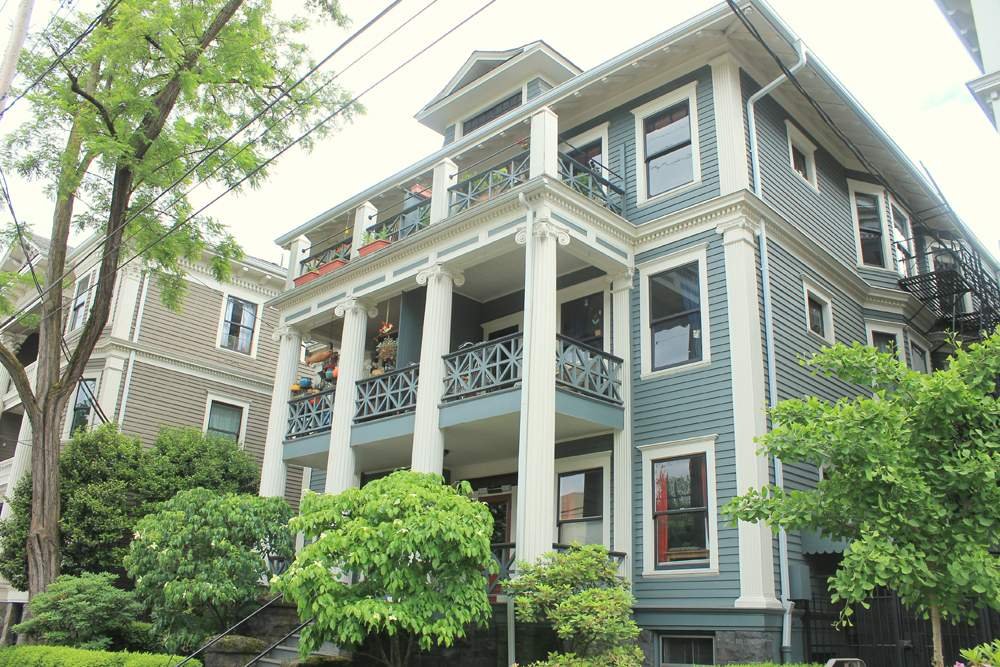
Beautiful large homes, in the West Hills, like this one, were bulldozed to make way for highways.

Portland exemplfies the song “Yellow Taxi” written by Joni Mitchell, which goes, they paved paradise and put up a parking lot… Portland was being raped and thousands of long time residents displaced. No one who was making a killing cared.

Our yellow house was built with four apartments. The front was built at street level on a steep hill leading towards downtown to the East, and to the North, the land was even steeper giving each apartment spectacular views of the city.

I couldn’t find an historic photo of the area but this is the type of house sacrificed for development

Each apartment took up an entire floor. The ceilings were at least 10 feet in height with windows almost to the ceilings. There were at least three bedrooms, a large living room, a kitchen and with just one bathroom. The back door opened out from the kitchen onto a balcony with stairs that led to the ground below.

This is not the house but reminiscent of the types of houses in the area.

This was in the late 60’s. Pure LSD was easily had and weed was $10 a “lid”. Our rent, if I remember right, was under $100/month. We didn’t need much money to live, so we bought pounds of marijuana, divided it into plastic sandwich bags and we put them in a large container just inside the front door. Whoever wanted to buy pot from us could leave their money and grab however much they wanted. The honor system at work.

Marijuana, LSD, psilocybin, peyote and the like, were all illegal. But at the time, we were more concerned that the house would be raided by FBI agents looking for draft dodgers and those who were AWOL. It had happened and it was scarey but if they’re looking for people, they had no jurisdiction to bust us for drugs.

Our life on Montgomery street was mostly peaceful. It was a good time for exploring both internally and the world around us. We were protesting the right of the US and other countries to invade others to procure resources. We were protesting a culture dictated by corporate greed and materialism. We wanted a simpler and more peaceful world.

Unfortunately, our idealism could not, and has not, changed the white and wealthy. We were using psychedelics, meditation and exploration into philosophies both western and eastern, to found a new path to a kinder and gentler world. But what I know now, is what history teaches us: the few wealthy are lords in the earth and the rest of us… well, we work for them and try to keep our heads above water. No one benefits from war but the wealthy and the young are sacrificed to that purpose.

Those were days that I would return to. Those were days when we thought that on that LSD trip, the answer had been given to us but language failed us. The answer slipped away as we “came down”. One definition of reality that I can recall so clearly came out as I sat looking out over the city as “loud tomato raisin”. I’m still looking for the translation. Perhaps one day I’ll be enlightened enough to translate. 🤭

Those were days of infinite sexual energy, which I didn’t experience again until my 40s and 50s. Hormone saturated freedoms. Dancing in the moonlight. Light shows. Live music and open mic poetry readings. Unbridled idealism anchored and tempered by existential nightmares that things always stay the same.

David Byrne sang, “Burning Down the House… same as it ever was, same as it ever was…” and it appears that we are burning down the house. We can see the ashes. But now it’s not just the big beautiful houses that were once our abodes but it’s the planet where we live.

Earth is on fire

Juan and Juan Manuel and my Roof

While living in Mexico, I learned what the rainy season really is. We’re talking rain so thick, so heavy, so hard that it comes through the roof.

We’re talking thunder so loud and that lasts so long that I swore that it alone could kill me.

And the lightening. Lightening that lights up the world every bit as bright as daylight.

We’re talking the jungle itself being torn away and swept into the streets… torrents of water carrying trees, and plants that wash down from the hillsides, into the streets and into the ocean turning it into a swirling brown mass of debris.

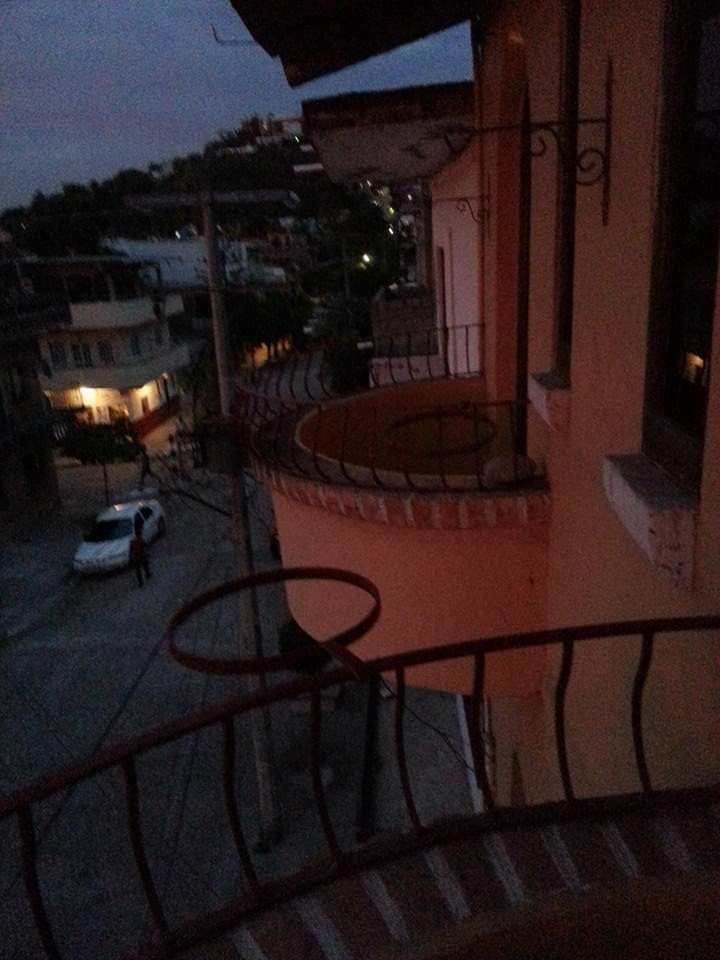
The only thing to do was to climb onto the bed, open the balcony doors and watch the show. Sometimes the storms would last so long that my nerves would shatter.

Geckos and insects would come in to shelter on the walls and take cover in the corners of the ceiling.

And then it would be over as quickly as it started. The heat persisted because the rainy season happens in summer… 100° and 100% humidity. Was it refreshing? No.

Always sweating, always wet. It was too hot and wet for hair, for jewelry, for underwear. Earrings would heat up and burn my neck. I cut off my hair to the scalp. And underwear? What for?

My roof leaked. Not leak like I could catch water in buckets, but water that stood inches deep that I sloshed out and off the balcony and into the street with a broom.

I’d had enough: I called Juan Manuel to fix my roof.

Juan Manuel sent Juan Manuel and Manuel to fix my roof. Meanwhile, Juan came. I thought Juan was sent by Juan Manuel but he wasn’t. I had to send Juan away. So Juan Manuel and Manuel fixed my roof. Sorry Juan for the confusion.

I don’t know who sent Juan.

True story.

My Right Arm

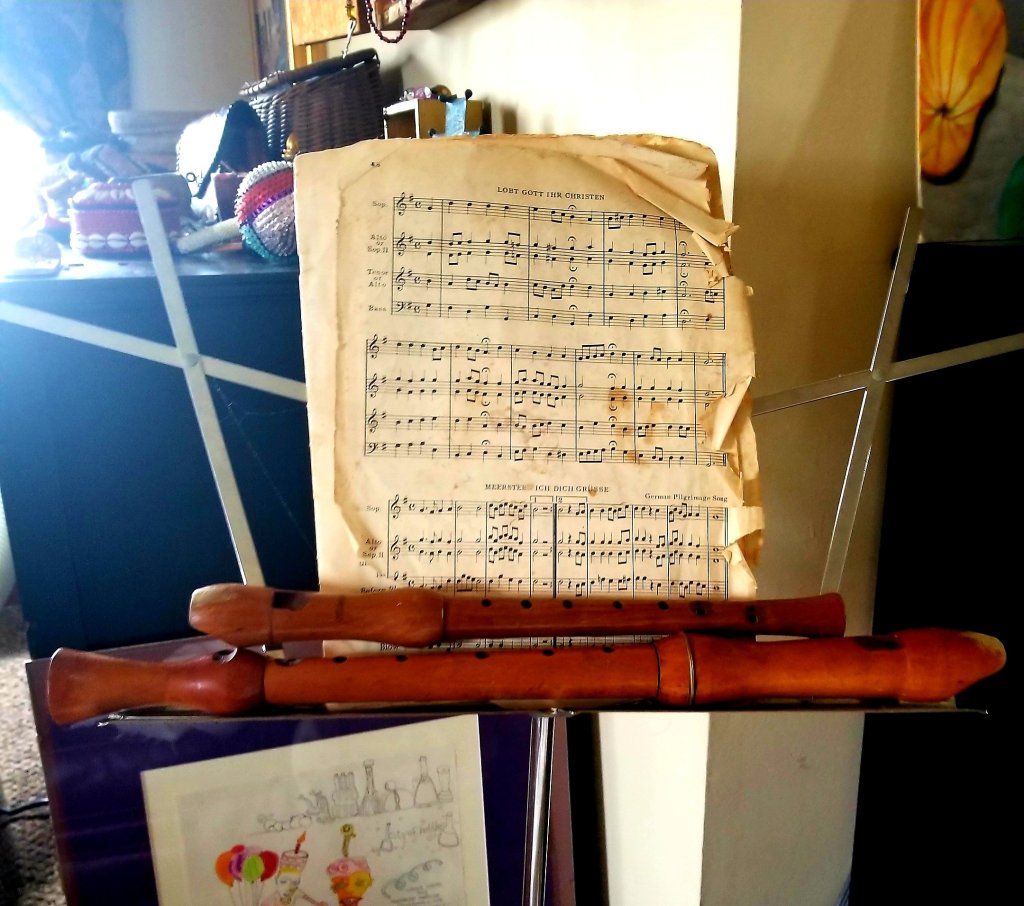
My recorders, an alto and a soprano. Constant companions for 50 years.

I finally have to let the next thing go. I reluctantly give up my recorders as I wonder what will be next. This is the last of my music making. I know without doubt that this is not the final loss.

My life was not governed by my right arm until the last decade. In fact, I never thought of it. It’s just been my right arm. I’ve made do. And no one noticed it.

As a young girl, there were games. There was volley ball, softball and soccer. Bicycle riding, scooters, pogo sticks. Swimming all summer at Pier Park. Mom enrolled me in tap dancing at two. And ballet classes thereafter until high school was over. I played the clarinet and bass clarinet in the band and the orchestra. Then there was spinning and weaving, and teaching aerobics. Riding mountain bikes and camping and hiking in the wilderness. Caring first for babies and then active children. There was laundry and cooking, cleaning, gardening…

Then what happened? When did the losses start happening? When did I notice it? What went first? I don’t remember it was so gradual.

I remember thinking in my 20s what it would be like to raise both hands over my head, but there was nothing lost. It was just a thought.

I wanted to be twirled around by my boyfriend while dancing, most of which is by the right arm. But I couldn’t, so he accommodated without me asking or explaining. We danced at home, at clubs and at house parties. But there was nothing lost.

At aerobic classes, I had to explain to my students to do with both arms, what I was doing with only one. But nothing was lost.

Kristi helped me fasten the back garters on my nylons every school day. But there was nothing lost.

I fell a lot on my bicycle when the handlebars jerked out of my hand and I couldn’t catch myself, so I was bruised and I’d bleed and now I have scars to prove it. But nothing was lost.

Sure, I dreamed of being a dancer or a musician but there was so much more that I wanted to be and do that I never bemoaned my fate. Nothing was lost.

Then what happened? When did it start? I really don’t remember. When did I realize that I was losing? What was the first thing I lost?

I think I first noticed that my arm was no longer serving me at full capacity, when as an archivist, I was struggling to place or retrieve 50 lbs. boxes overhead in storage. As this became more troublesome, I was dropping boxes, while standing on a ladder, pulling them with my left hand onto my chest. I would balance them there while descending the ladder and walking in a back bend to the nearest table where I carefully slid it to safety.

However, I knew that this just wouldn’t do. Fortunately, there was never a disaster. There easily could have been. I could have been injured and I could have destroyed or damaged materials. The collection was comprised of priceless museum artifacts, photographs that included dueguerrotypes, glass lantern slides, and every other type of photographic variants, priceless diaries, 150 years of research documents, books, etc. I’d been caring for these precious items for nearly 16 years, creating the first organized archive at my institution. My pride was hurt. I’d never had to accomodate for my arm before.

Again, fortunately, I had volunteers, students and an archival assistant to pull materials for researchers, to shift boxes, to help retrieve collections from departments, schools and individuals. My assistants began to do all of the heavy work that had always been my job. Yes, of course, I had writing to do, research, acquisitions, teaching and training, creating exhibits, committee work and all of the administration duties, management of the archives and workers, but the heavy lifting was over.

My wonderful left arm had been doing double duty all of my life. But now, my shoulder was failing to do everything I had always expected of it. My thumb, my dear poor thumb, had been pulling files, picking up large and small books and everything else throughout my life. Eventually, arthritis has developed in all but my ring finger, while my right hand is as soft and unused and unharmed as a babies.

This degradation was so gradual that I failed to see its progression for years… or did I ignore it, not wanting to admit that my right arm was responsible for the unwanted changes occurring in my life.

I still want to ride bikes, weave and spin, carry in firewood, rake the autumn leaves, carry in groceries two bags at a time, wrap both arms around someone and play my recorders. But I have to acquiesce. If I don’t accept the incapacity of my right arm, I will only do further damage to my left arm and without it, I won’t be able to make my bed, brush my teeth, or do any other kind of self care including eating. Without my precious left arm, I would not have had the adventurous life I have lived. I accept now that there is loss. There has been loss, I just didn’t see it.

I give great credit to my parents who never said, “No, you can’t do that”. I played right along side the neighbor kids. Mom, numerous times had to put my right arm back in the socket, until a bone fusion permanently held it in place. She carried me to the doctor with a broken arm. They bought me a softball mit, a tricycle and a later a bicycle. They sent me off to the pool on my bike to swim all day. I climbed trees and raced up and down sand dunes and mountain trails. When I was in a full torso and arm cast after surgery, they agreed to let me ride on the back of a motorcycle with my boyfriend to go to the races. Because of them, I never told myself that I couldn’t do something. Because of them, my life now is full of joy, contentment and unbelievable memories.

Sure, I couldn’t be a dancer or a musician, but I could dance and play music. And I could and did thousands of other things. So, though I have lost and am losing my ability to do lots of things, I can still do lots of other things.

You might say that I was lucky since there are people who have suffered greater loss than me. I’m painfully aware of that and I know just how lucky I have been. But this is my story. This is my life and I have lived every moment of it. I now take better care of my left arm and I hope it will serve me as faithfully as it always has until the end of my days. However, it deserves a rest, and I’m fine with that.

Postscript: Once while walking down the avenue in Santa Monica, a stranger came up to me and while looking into my eyes said that my right arm would lead me to the light.

I’m still waiting for that. 🤓

Every Last Thing

Every Last Thing

Every last thing

158,000 will die today.

What memories and secrets do we hold heart-side and in our bodies.

Do we let them bind us? Do we let them flow through, cleansing wounds long neglected.

Let’s find joy in adventures we thought were painful, when in fact they were our wild ride.

How fortunate we are to have these memories that sweep through our souls.

Remembrances of days long past. Let’s look at them, share them, revel in them.

We were and are fully alive. That means all of it.

Every last thing.

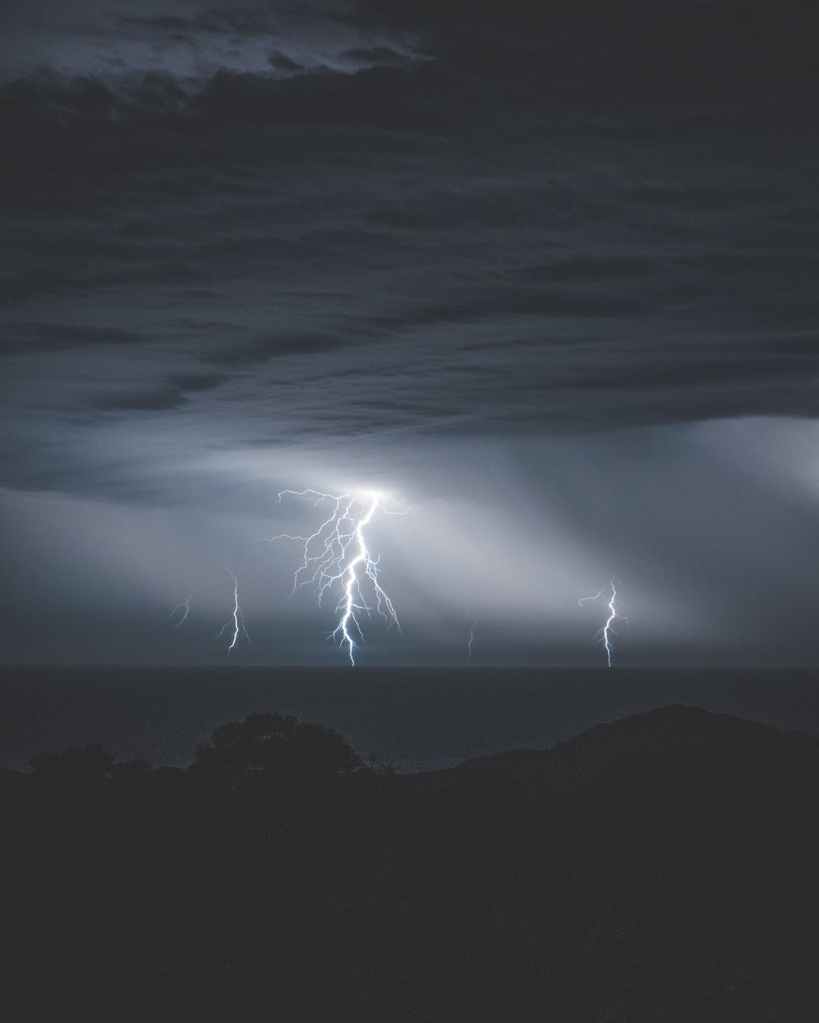
When it rains, it pours and roars and throws out spears of lightning.

It’s Rainy season in Puerto Vallarta

The first time I experienced a thunderstorm in PV, I thought that if thunder could kill I’d be dead. It literally shakes the windows and your bones. These storms are like nothing I’ve ever seen.

At night the sky lights up and the entire world is like daylight and all things are in sharp contrast. It truly is unbelievable.

And the rain, the sky opens up and sheets of rain come down as if you’re under a waterfall. Truly fantastic storms… and it’s hot. Temperatures are in the 90s and the 100s with 100% humidity. Truly spectacular.

The ocean turns brown and fills with jungle debris from torrents running out of the hills; all the dry gullies rush with water and floating garbage. The jungle creeks fill to overflowing and merge with the water filling the gutters in the streets. Then it’s over.

Everything is soaked, the strong sun comes out and the evaporation begins and within minutes everything dries out but the air. Then you’re left with 200% humidity and you’re soaked in sweat.

And that’s how it is in the rainy season in Vallarta.