Warmed by Sheep and Artisans

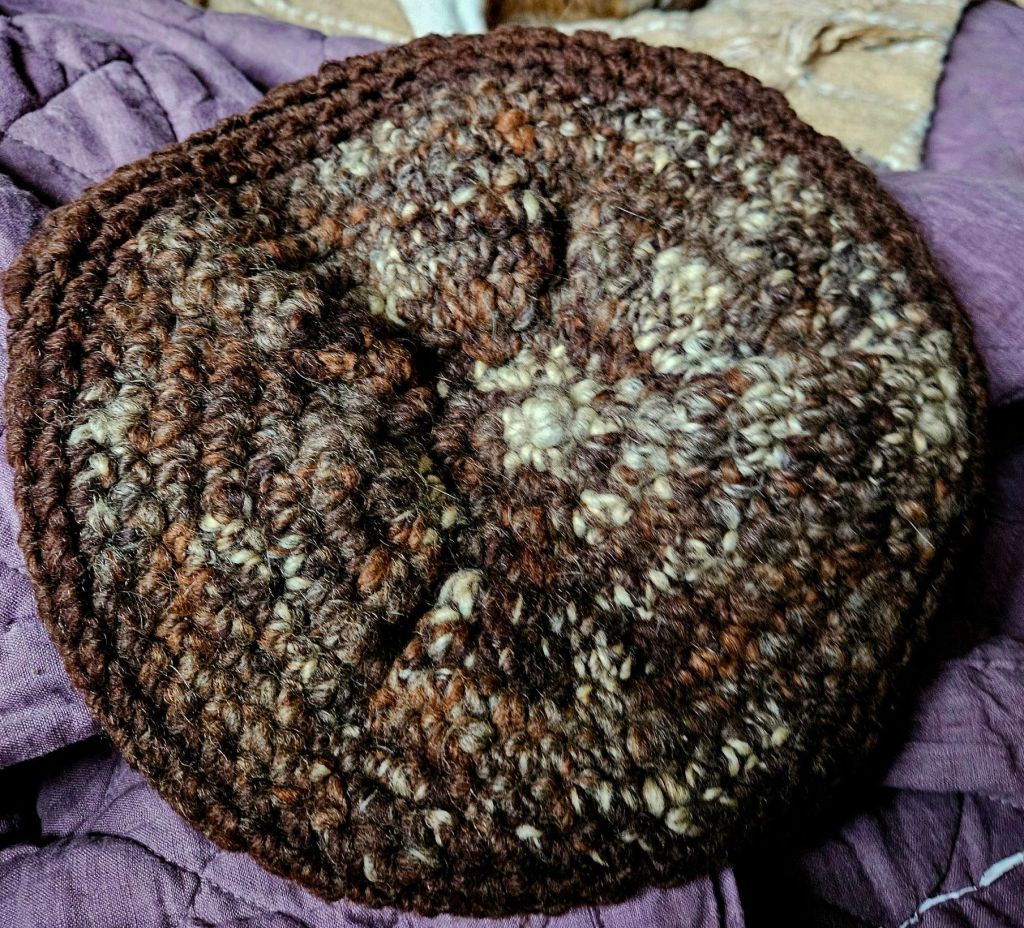
When I was rummaging around my room this morning, I came across this hat that was peeking out of a basket from under other winter wear. It has been years since I paid much attention to it… since I had begun to knit my own hats some years ago.

I, at first, mistakenly identified it as the art of the Cowichan Indians of British Columbia because of the natural colors and unplied yarn used by the tribe to create mostly sweaters and hats.

Sometimes, I’m good at remembering details, but other times, I’m not.

Actually, Jack reminded me that it was the famous Paula Simmons who knit this hat. She was one of the first PNW (Pacific Northwest) artists to raise and shear her own sheep. She processed the fleece, carding, and spinning the fibers, creating the yarn to finally knit garments and accessories like this hat.


With the help of Jack’s memory, he reminded me where we bought this hat. The time frame had to be between 1969 -1972, when we were living in a small house in St. Johns in North Portland. We were just married, and before children. We bought it on a trip to Seattle, Washington, at an art gallery/ craft store at the Space Needle. The store and its name are long forgotten.

Part of my confusion was that I did own a Cowichan Indian sweater, and the hat was created in a similar yarn. I know we bought it before 1972 because I have at least one photo of me wearing it in 1973 – 74, walking through a snowy forest with two year old Hannah, riding on my back. ( I will post the photo when I can find it). That means it would be about 52 years old. (I found it)

The hat, the sweater, the girls, and Skokie the dog

It is knit in unplied and undyed natural sheeps wool. It’s never been washed, and you can still feel the lanolin.  The wool is very rustic and rough to the touch and still causes my forehead to itch, but it’s the warmest hat I own. The wool, in its natural state, is completely waterproof… not water resistant but waterproof.

It is in perfect condition without so much as a moth hole. It could pass for “unused.” This hat is one of my most treasured possessions, and it’s probably worth only a few dollars. The Cowichan Indian sweater was bought around the same time, but unfortunately, it burned in our house fire in 1974-75. I so wish I still had that sweater.

Jack bought the sweater for me when he worked for Norm Thompson. (A thorough history of Norm Thompson Outfitters is interesting and can be found on wikipedia.)

If you’re curious about the Cowichan Indian’s trade in knitwear, please see the following website for more information. Here, you’ll see lots of photos of the sweaters and the knitters, and their fascinating history:  http://knitwithpurpose.com/knitters

I see that the Cowichan Trading Company store, established in 1947 in Vancouver, BC,  has closed permanently. I don’t know what this might mean for the trade in sweaters, but I see that there are stores still stocking them, and there are many new and used online.

Original, authentic Cowichan Indian sweater

All of this interesting stuff because I found my  hat made by Paula Simmons.

Folded Origami Dog

Dogs can fold

To wish I could fold like this as autumn approaches.

We will find piles of blankets and quilts.

Soft, wool socks and hand made sweaters.

Roaring fires in stoves and fireplaces.

The joys and comfort of summer’s labors.

Felix is Done! And Now I’ll Wear it.

This photo makes the sweater look long but it’s actually cropped and comes just to the top of my hips.

This baby’s done! It’s the FELIX cardigan, knit in Woolen Twines rustic worsted merino in the colorway, Fossil (undyed). The yarn is the color of the sheep it came from.

As I’ve said before, Jule (owner and creator of the company and the dye pots) only harvests the best wool from local sustainable and organic farms and caring shepherds in her homeland of Germany. She has it spun in a small local mill and though she is a hand dyer, I chose this natural undyed color for this sweater. However, her natural dyes are some of the prettiest colors I’ve ever seen.

This was a joy to knit. The yarn, the pattern and the finished sweater just made/makes me happy.

I bought the buttons from Vintage Buttons on Etsy. They were made in the 80s of French river shells and hand painted. These also make me happy… like a bag full of gummy candies.

It’s too big for me but it’s large and cozy and will fit over anything. It’ll be a daily wearer.

I’ll definitely make another one of these but in my true size… determining my size is like trying to catch a wild horse in the Painted Hills of… where are the Painted Hills?

The Ranger is Ready… almost

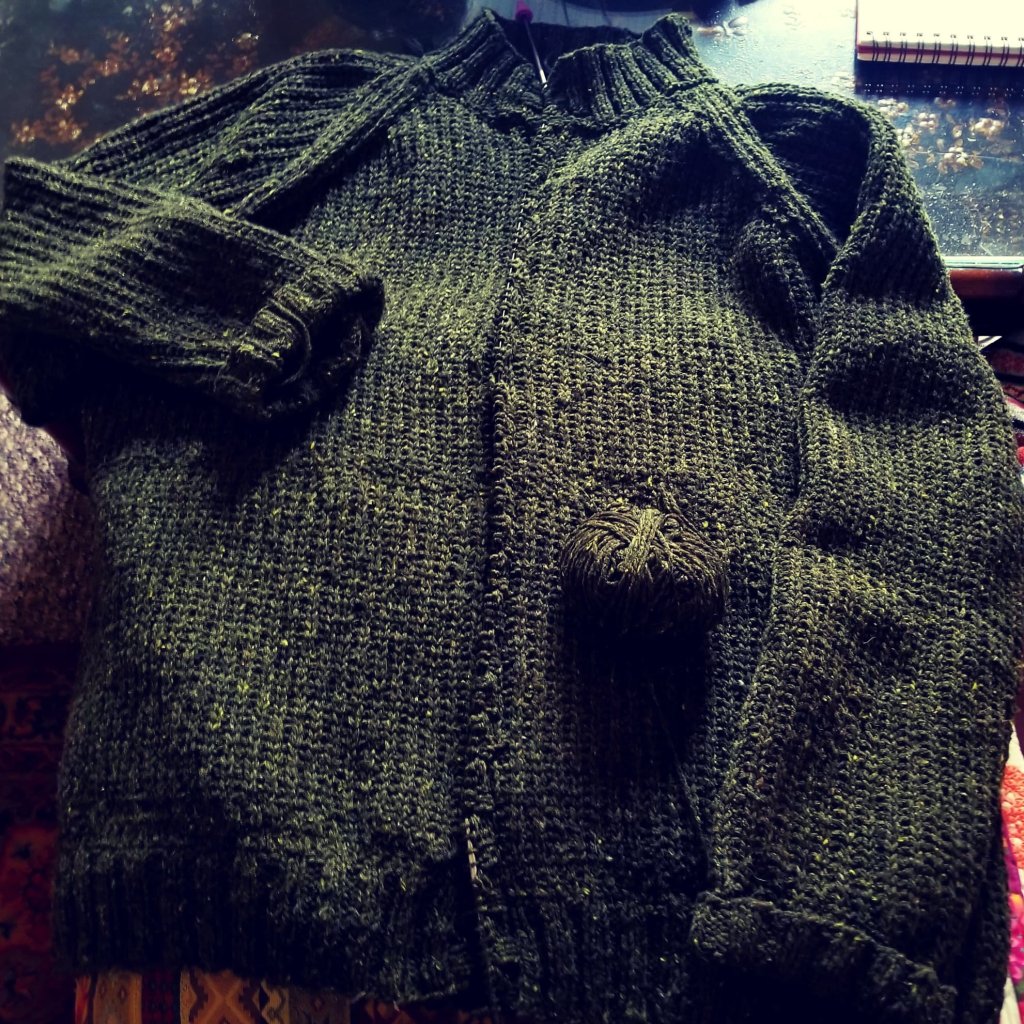
Just waiting on the buttons to finish the button hole band.

The long awaited Ranger sweater, by Jared Flood, is done except for the button hole band… we’re waiting on the buttons.

Jesse (son and fortunate recipient) has ordered some Native American handmade silver buttons that will really enhance this cardigan.

The yarn is local to me and made of Brooklyn Tweed, Shelter, in the colorway, Artifact. The yarn is spun of Targhee-Columbia wool. It’s worsted weight and is woolen spun into a very light 2 ply that if not careful can be pulled apart almost as easily as unspun yarn like the beautiful Swedish Nutiden yarn.

Soon, I’ll be giving it a good soak in warm water and then I’ll pin it to block it to hopefully give it a perfect fit. I can’t hardly wait to see the stitches bloom and come together in the most pleasing way.

Jesse will be wearing this sweater when the weather warrants a big cozy jumper. When the warm monsoon like rains of fall turn into bone chilling shards of icy and soaking rains, he’ll be warm. Because wool, even when wet. or covered in snow, remains warming. Just ask any sheep.

This was not an easy project. I warn you that if you’re not familiar with garment making and reading a complex pattern, start with something easier. Bette Hunter, of Scotland’s Oban Seil Farm, says that some patterns read like a foreign language. These challenge even the most experienced knitters.

I did a number of techniques that I have not attempted before. First and foremost was knitting a sweater from the bottom up. I will, I swear from this day forward, reject any pattern that starts you at the bottom. How are you suppose to know if it’s going to fit if you can’t try it on along the way? I learned so much from knitting this beauty, but it put me through my paces.

I love the yarn, I love the sweater but please universe, don’t let me do this again.