Dad wore large metal cleats on his expensive brown leather Florsheim brogues. These shoes were weekly tended to until they were softly polished to a warm, soft sheen. Even without the cleats, they were heavy. I can still remember the smell of shoe polish and the soft cloth and brushes in Dad’s kit.

Every day, after he was done with work, we could hear him coming home from the bus stop around the block before we could see him. The large cresent shaped cleats on the heels of his shoes rang out on the concrete sidewalk. We ran to meet him as he rounded the corner of our street.

It was a comforting sound that we waited for, even though Mom warned that he would soon arrive and we were to put our toys away and clean up our projects and to clear the walkway of bicycles, scooters, pogo sticks and such.
Mom was usually cooking dinner at this time of day, so she had food ready for him, knowing that he would be tired and worn after a long day. Us kids were to make way for him, so it was a peaceful and relaxing place for him to unwind.
As soon as he removed his shoes, he would put his shoe trees inside to stretch and maintain the elegant shape of these expertly designed and sewn shoes. The cleats were not only music to our ears, they were practical.
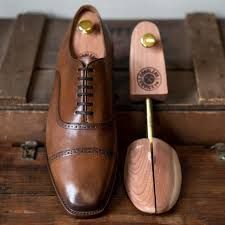
The cleats prevented the heels from being worn down. When the cleats themselves wore down, the edges were thin and sharp as knife blades. New ones were applied by the neighborhood shoe repairman.
Shoes in those days that had worn out heels and soles were not disposed of but were repaired. My great Uncle Curt had a shoe repair shop where every morning he opened the door knowing that customers would be coming to drop off or pick up shoes. That was when shoes weren’t disposable.
Uncle Curt’s shop smelled of tanned leather and shoe polish. Behind the counter stood a huge black sewing machine and a workbench with neatly arranged hammers and cutters and other tools of his trade and bins of nails and threads and cords of all types and cleats, of course.
The shelves lining the walls were filled with every type of shoe from heavy work boots and workshoes to dainty women’s high heels. He also repaired purses, belts, suspenders, and anything needing his handiwork. There were also a couple of chairs for customers to wait if they just needed a quick fix, like having to replace worn-out cleats.
Dad took care of what was important to him. I remember the smells of banana from the oil when he cleaned his guns and how his tackle box smelled when he cleaned, rearranged and prepared the hooks, the flies, the bobbers, the sinkers and spools of fishing line… and little jars of florescent fish eggs.
When Dad brought out his shoes, guns, tackle boxes, and other stuff to clean and care for, it wasn’t in the basement, not in the garage and not even in the kitchen. It was in the living room where he was in the middle of his family, in the midst of the most important things in his life… in his heart, where he tinkered.
We loved to watch him and ask him this and that while he taught us the value of our belongings and the importance of what we had. But mostly, he taught us to love family. And we do.
I wish I could hear him coming down the street today. He left us way too young. He was only 52 years old when he passed away. But he left an indelible mark on us all. I insisted on wearing taps/cleats on my shoes, too, just like Dad. I wanted to be just like Dad… I hope I am.


 eyeamdust