I reluctantly started work in the archives on the university campus.
This was not my choice. As I was taking classes in archival management, I was hoping for more diverse collections to work with as an internship but I was convinced, no, it was more like I was ordered, by my instructor/mentor that I would be going to work at the second oldest medical school on the west coast. I said no and he said yes. If I was going to pass my class, I had to acquiesce.
I was introduced to the part of the collections stashed in the Old Library, stored in a small dark and damp room of concrete block with a 12-foot ceiling and one opaque drafty window. There was a dim bulb hanging in the middle of the room and plastic sheeting covered the wooden cabinets. Before reaching what was known as the North Tower, I could smell the musty contents from the weird landing that twisted between the third and fourth floors, leading up 6 stairs to a locked door.
All disappointment faded and my excitement grew when I was shown what treasures were hidden there and I imagined the work that lay ahead.
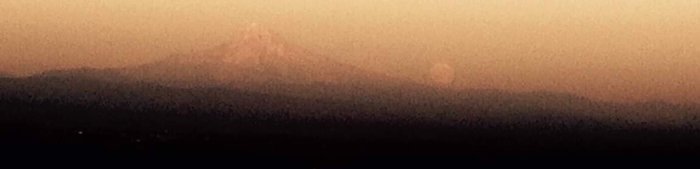
I soon learned that there were other collections hidden in a locked room on the 4th floor known simply as 440. To reach that room from the North Tower, one must pass through a long room with windows along one whole wall facing east with a view of the sunrise over Mt. Hood. And lining the west wall were several small offices.
Then there was room 300, just below the 5 steps that led to the North Tower, this was to become my office. There was another storage space that held the museum collection in the Meier & Frank warehouse off campus.
The Old Library, built in 1939, was a maze of hallways, passageways, staircases, many, many rooms, partial floors, small and large storage areas and closets. It was now only used to store books in its stacks, for my office, and for the archives storage.
One enters the Old Library through the wide double bronze doors whose foyer leads to a beautiful auditorium which is frequently used for various events.
Up a few stairs from the foyer is the Great Hall, a wide lobby, with four beautifully appointed rooms that were rarely used when I first went to work there. In this wide room there once sat the Library director and staff. The rooms were set up for student study and behind the reference desk was a door leading to 4 floors of stacks and study carousels with a single elevator.
By walking through the Great Hall, one comes to another set of double doors that leads down a few more steps to another smaller space. At one end is another set of double bronze doors leading to an outside staircase and out to a courtyard surrounded by structures of various architectural design.
Just directly in front of the Library is the first of the structures built to house the medical school, then known as the Medical Science Building (1919). In this room, there is a staircase just before going out the doors that lead down to other study rooms, storage areas, and locked doors and small passageways and outside access doors.
Going back to the foyer, there’s also a small stairway leading down to locked doors leading to locker rooms and into the stacks and access to the single elevator and outdoor access.
From the long room, I described, on the 4th floor, one can access a hallway with rooms for study. In this hallway, there is a long staircase that leads to the Great Hall. There is also a dumbwaiter.
On the lowest level, accessed by staircases and the elevator is a subfloor, appropriately called The Pit, which also houses some of the archival collections.
At one time the Library was a very busy place. Built in 1939, it served until the early 80s when the Library moved into a new “high tech” building but leaving many books and journals in the stacks.
For a time, an access services employee sat at the reference desk to page books being requested. The stacks were closed. A rumor circulated that someone was urinating in the stacks. Soon the library quit staffing the reference desk and books were paged twice daily by a student. Occasionally, copies were made by a library assistant on the first floor where some older copiers were housed.
Students no longer used the library, faculty nor staff visited the once vibrant structure. It was quiet except for an occasional visit from maintenance or housekeeping or when researchers or donors came to visit me. It was just me having this old beautiful building.
Staff who paged books and who once sat at the reference desk often reported hearing strange noises in the stacks, doors opening, and closing, footsteps, and the elevator doors opening and closing and the elevator then going up and down on its own.
At this time, the buildings doors were left unlocked. Sometimes university staff hid away from their duties taking afternoon naps on the couches in the small space on the first floor. Rarely, I would find maintenance folks wandering around, or security walking through but this was unusual and sometimes startling since I was accustomed to the building being empty and quiet.
I arrived everyday at 7:00. This day was no different. This was before I owned a cell phone and the only accessible phone was in my office. The office door was always locked and secured with an old alarm keypad, which occasionally malfunctioned. The office held our highly valuable historic book collection. If I was stepping out, I never left the door unlocked not even for a minute.
This day, like every other day, I walked through the entrance, climbed the short flight of stairs, walked through the empty Great Hall and up the flight of stairs on the far end of the large room to my office where I turned off the alarm, unlocked the door and reached to turn on the lights. I opened the blinds and turned on the computers.
Nothing seemed different than any other day. The Library was empty and silent and mostly unlit. I always felt that it was a shame that this remarkable building was left virtually abandoned. I would have loved to have turned it into a museum, bringing back our large artifact collection from off-campus.
I felt honored to be responsible for the large collections that our first librarian, Bertha Hallam, had collected over many decades. I often thought of her and felt that in actuality, I was responsible to her for the care of the collections. I was sometimes distraught to find that proper care had not been given to the physical evidence, the extant history of this grand institution.
I proudly cleaned, organized and described the collections now in my care. I forgot my objections to working here and delved deeply into each and every piece of paper, artifact, photograph and textile. I was happy everyday to go to work to discover what was in a box, on a shelf or table or on the floor or in a closet, in the North Tower or in Room 440. I happily climbed ladders, crawled around on the floor and lifted boxes weighing over 50 lbs. I had found my niche, no mind what disturbing medical apparatus, ghoulish photographs, mold, dirt, sharps and chemicals I might encounter. And, my skills and experience had earned me the trust of administration to work alone and independent of oversight. Hence, my aloneness in the empty old building.
I didn’t need much. I needed only computers and software, scanners and materials in which to house the collections. I was given a budget and I was satisfied to fill everyday with my work.
So back to this one day; a day that left me shaken. I left the office and walked up the stairs and into the long room heading to 440 to retrieve some boxes. I had locked the office door behind me and walked through 2 more doors that shut behind me, walking into the hallway outside of 440. I didn’t notice anything amiss, I put the key in the lock, opened the door and walked in, and as it closed behind me and before I could turn on the lights, something or someone grabbed the door handle and began to violently shake the door trying to open it.
It was immediate. I had seen no one, nor heard footsteps nor had I felt a presence… nothing. How could it have been there, so close on my heels, to grab the handle just as the door closed behind me.
Thank goodness the door had latched because whatever was out there was relentless. Something was trying to tear the door from its hinges and from its lock. It shook and shook.
The noise was thunderous as I fell to the floor. I wanted to hide out of view from whatever was trying to get in. If it stopped long enough to peer through the small window in the door, I did not want to be seen. I was certain that whoever or whatever was out there, had no good intentions. I crawled on my hands and knees on the dusty floor to a small closet room on the near wall. I dared not turn on the light. I was in near total darkness. I cowerd there while the door continued to shake, while the noise grew louder. I couldn’t think of what I could do. I could only imagine what it could do. There was no escape. I was trapped. There was no phone, no way that I could let anyone know the trouble I was in. My heart was beating wildly in fear. I waited for what felt like at least a half an hour. Whatever it was, it wanted in badly. Why? Why hadn’t I seen or felt or heard anything as I approached the room? Thoughts were assaulting my sense of reasoning. I was imagining the worst.
The shaking slowly subsided. The shaking grew less intense. There were intervals where the shaking stopped entirely then would resume once again. I really had no idea how long the assault had been going on. I had no watch and my sense of time was distorted by fear.
Eventually the shaking and noise stopped suddenly… as suddenly as it had begun. I was paralyzed and afraid to move. What if whatever was out there was waiting for me to emerge from the dark room? What if this was its strategy?
No one was going to come to find me. No one would suspect my predicament. If someone came to my office to find me gone… which was not unusual… I could have been anywhere. I could be meeting with donors or researchers. I could be in any one of our storage areas. I might have been out for coffee. More than likely they would have called first and finding me gone would have tried later.
When I got my wits about me, I began to think a little clearer as my heart rate slowed. But my mind was reeling. If it was maintenance or facilities personnel, they would have spoken to me in the hall before I entered the room, wouldn’t they have? If it was a human of any ilk, I would have seen or heard them, wouldn’t I have? How long can I sit here, hiding and waiting?
At some point my courage arrived. Leaving the light off, I stood up and crept along the wall until I got to the door. I leaned until I could see out of the small window. What would I do if I saw something looking back at me? What would I do if it was hidden in the hallway or in any of the small rooms, or on the stairs or in the doorway of the stacks area or hidden in the janitors closet? What should I do?
One thing I did know is that I couldn’t stay where I was. I would have to be brave and make a run for it. I took one last look through the window and put my hand on the door knob. I jumped back. I thought I heard something. I felt a chill.
I reached out again for the door knob and turned it slightly as I continued to peer through the window. Nothing. No sound. Nothing to see. I turned the knob all the way until I heard the latch release. Still nothing to see. At that moment, I gave the door a push so hard it hit the wall. I was hoping that if any thing or any one was there, I would hit it hard enough that I would have a chance to escape.
I bolted left to the stairwell leading down to the Great Hall, to the foyer to the front doors leading out. When I reached the stairs outside at the entrance to the building I fell on the last step, hoping no one saw me.
I was seriously shaken. Nothing about this made sense. I didn’t move for awhile until everything slowed down. Eventually I called Administration and insisted that I be given a pager and that they install a phone in that room. I gave the excuse that “anything” could happen with me alone in the building. And “anything” had already happened. It wasn’t long and I had a pager and a phone.
Though I love to tell this story, and it is true, it still doesn’t make sense. Beware those who dare pass through these hallowed halls.

 eyeamdust